
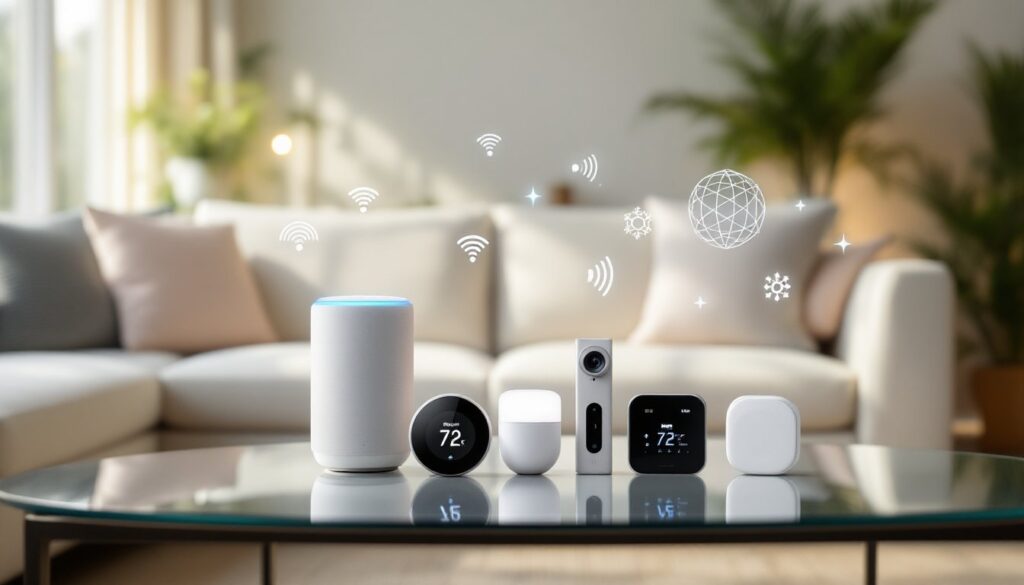

Installing a smart thermostat is easy. Getting it to talk to your smart lights, door locks, and voice assistant? That’s where things get messy. The reason isn’t the devices themselves, it’s the invisible language they use to communicate. Smart home protocols are the wireless communication standards that let devices share information, and choosing compatible ones determines whether a setup runs smoothly or becomes a frustrating tangle of incompatible gadgets. Understanding these protocols before buying devices saves money, eliminates compatibility headaches, and makes expanding the system later much simpler.
Table of Contents
ToggleKey Takeaways
- Smart home protocols are wireless communication standards that determine device compatibility; choosing compatible ones prevents expensive mistakes and eliminates frustrating integration headaches.
- Zigbee and Z-Wave use mesh networking for excellent reliability and battery life, making them ideal for sensors, locks, and switches across larger homes.
- Wi-Fi is best suited for high-bandwidth devices like cameras and video doorbells but can overload routers with 20+ connected devices and drains battery-powered devices quickly.
- Matter, launched in 2022, is a universal application layer that enables devices from different manufacturers to work seamlessly across Apple Home, Google Home, and Amazon Alexa simultaneously.
- For new installations, prioritize Matter-compatible devices to future-proof your setup; for expanding existing systems, stay within your current protocol ecosystem unless using a multi-protocol hub like Hubitat Elevation.
- Battery-powered devices should use Zigbee, Z-Wave, or Thread, while mains-powered devices work across protocols; always verify encryption standards and local functionality before purchase.
What Are Smart Home Protocols and Why Do They Matter?
A smart home protocol is a wireless communication standard that defines how devices send and receive data. Think of it as the difference between speaking English, Spanish, or Mandarin, devices using the same protocol can understand each other, while those on different protocols can’t communicate directly.
Most smart devices don’t connect to Wi-Fi routers the same way laptops or phones do. Instead, they use specialized protocols designed for low power consumption, extended range, or mesh networking. Zigbee and Z-Wave create their own mesh networks, where each device acts as a signal repeater. Wi-Fi connects devices directly to the home network. Bluetooth handles short-range communication, often for setup or local control.
Why does this matter? A homeowner who buys a Zigbee smart lock and a Z-Wave light switch can’t control both from the same hub without additional hardware. They’re speaking different languages. This becomes a bigger problem as the system grows, adding cameras, sensors, thermostats, and outlets means juggling multiple apps, hubs, and ecosystems.
Compatibility also affects reliability. A mesh protocol like Zigbee gets stronger as more devices join the network, since each one extends the signal. Wi-Fi devices, on the other hand, can overload a router if there are too many connected at once. Choosing the right protocol upfront prevents these issues and makes building a smart home less of a patchwork job.
The Most Popular Smart Home Protocols for Homeowners
Zigbee: Low-Power Mesh Networking for Reliable Connectivity
Zigbee is a low-power, mesh-based protocol used in millions of smart home devices. It operates on the 2.4 GHz frequency and supports up to 65,000 devices on a single network, though practical limits are much lower. Popular devices include Philips Hue bulbs, Samsung SmartThings sensors, and many smart locks.
The mesh network is Zigbee’s main strength. Each powered device (not battery-operated sensors) acts as a repeater, extending the signal throughout the home. If one device fails, the network automatically reroutes through others. This makes Zigbee ideal for larger homes or installations with many devices spread across multiple rooms.
Zigbee requires a hub or bridge to connect to the home network. Amazon Echo Plus, Samsung SmartThings, and Hubitat Elevation all include built-in Zigbee radios. Without a compatible hub, Zigbee devices won’t work. Battery life is excellent, Zigbee sensors can run for years on a single coin cell battery.
One downside: not all Zigbee devices are fully compatible. The protocol has different profiles (Zigbee Home Automation, Zigbee Light Link, etc.), and manufacturers sometimes carry out proprietary tweaks. Most modern devices follow the Zigbee 3.0 standard, which improves cross-brand compatibility. When several smart home automation techniques are combined, Zigbee provides reliable performance.
Z-Wave: The Long-Range Solution for Whole-Home Coverage
Z-Wave operates on the 908.42 MHz frequency in the U.S. (frequency varies by region), which avoids interference from Wi-Fi, Bluetooth, and microwaves. It supports up to 232 devices per network and offers a range of up to 100 feet per hop in open air, often farther than Zigbee indoors.
Like Zigbee, Z-Wave uses mesh networking. Each mains-powered device extends the network, and the protocol supports up to four hops between the hub and the farthest device. This makes Z-Wave a solid choice for whole-home coverage, especially in larger or multi-story houses.
Z-Wave devices are certified by the Z-Wave Alliance, which enforces strict compatibility standards. Any Z-Wave certified device should work with any Z-Wave hub, regardless of brand. This makes mixing and matching switches, locks, sensors, and outlets straightforward.
Z-Wave also requires a hub. Popular options include the Aeotec Smart Home Hub, Hubitat Elevation, and HomeSeer controllers. The protocol is common in security systems, smart locks, and HVAC controls. Because Z-Wave operates on a dedicated frequency, it’s less prone to interference than 2.4 GHz protocols, but device selection is narrower than Zigbee or Wi-Fi.
Wi-Fi: Direct Internet Connection for High-Bandwidth Devices
Wi-Fi connects devices directly to the home router, eliminating the need for a separate hub. Most smart plugs, cameras, video doorbells, and voice assistants use Wi-Fi because it offers high bandwidth and direct internet access.
Wi-Fi devices are the easiest to set up, download the app, connect to the network, and they’re ready. But Wi-Fi has trade-offs. Each device adds load to the router, and too many connections can slow down the network or cause dropouts. Most consumer routers handle 20–30 devices comfortably: beyond that, performance degrades.
Power consumption is another concern. Wi-Fi radios draw more current than Zigbee or Z-Wave, so battery-powered Wi-Fi devices need frequent recharging or large battery packs. That’s why Wi-Fi sensors and locks are rare, most Wi-Fi devices plug into wall power.
Wi-Fi works best for devices that need high bandwidth: security cameras, smart TVs, and video doorbells. For low-power sensors, switches, and locks, Zigbee or Z-Wave are better choices. When comparing smart home tech versus traditional systems, Wi-Fi devices often feel more accessible but can complicate network management.
Matter: The Universal Standard Transforming Smart Home Compatibility
Matter is a new smart home standard launched in late 2022 and gaining traction in 2026. Developed by the Connectivity Standards Alliance (CSA), including Apple, Google, Amazon, and Samsung, Matter aims to solve the compatibility mess that’s plagued smart homes for years.
Matter isn’t a replacement for Zigbee, Z-Wave, or Wi-Fi. Instead, it’s an application layer that runs on top of existing protocols, primarily Thread (a low-power mesh protocol), Wi-Fi, and Ethernet. A Matter-certified device can work with any Matter-compatible hub or voice assistant, regardless of manufacturer. That means a single smart bulb can be controlled through Apple Home, Google Home, and Amazon Alexa simultaneously.
The Matter standard’s universal approach simplifies setup and eliminates brand lock-in. Homeowners no longer need to check whether a device works with their existing ecosystem before buying. If it’s Matter-certified, it works.
Matter devices use Thread or Wi-Fi for communication. Thread is a low-power, IPv6-based mesh protocol similar to Zigbee but designed specifically for Matter. It requires a Thread border router, built into many newer smart speakers and hubs like the Apple HomePod mini, Google Nest Hub, and Amazon Echo (4th gen).
Device selection is still growing. As of early 2026, Matter supports smart lights, plugs, switches, locks, thermostats, sensors, and window coverings. More categories are being added regularly. Major brands like Philips, Eve, Aqara, and Leviton have released Matter-compatible products.
One caveat: Matter doesn’t magically upgrade old devices. A Zigbee bulb from 2018 won’t suddenly become Matter-compatible. Some manufacturers offer firmware updates to add Matter support to newer devices, but many older products will remain on their original protocols. When evaluating smart home tech strategies for new builds or major renovations, prioritizing Matter-compatible devices future-proofs the system.
How to Choose the Right Protocol for Your Smart Home Project
Start by identifying what devices are already in use or planned. If the home already has a Zigbee or Z-Wave hub, expanding that ecosystem is usually the simplest path. Mixing protocols works, but it requires a hub that supports multiple standards, like the Hubitat Elevation or Home Assistant running on a Raspberry Pi.
For new installations, Matter-compatible devices offer the most flexibility. They work across ecosystems and future-proof the setup as more products come to market. If Matter options aren’t available for a specific device category, consider different smart home protocols based on the application:
- Zigbee or Z-Wave for battery-powered sensors, smart locks, and switches. Both protocols excel at low-power, mesh-based communication.
- Wi-Fi for cameras, video doorbells, and devices that need high bandwidth or direct internet access.
- Thread (via Matter) for new devices that benefit from mesh networking without the compatibility quirks of Zigbee.
Range and home size matter. Z-Wave’s longer range per hop makes it a better fit for large homes or properties with detached structures. Zigbee handles higher device counts but may require more repeaters in sprawling layouts. Wi-Fi range depends on the router and any mesh access points already installed.
Power source is another factor. Battery-powered devices should use Zigbee, Z-Wave, or Thread. Wi-Fi drains batteries too quickly for sensors or locks. Mains-powered devices like smart plugs and light switches work on any protocol.
Consider the long-term plan. Adding a dozen devices now? A simple Wi-Fi setup with a voice assistant might be enough. Planning for whole-home automation with 50+ devices? Invest in a hub that supports Zigbee, Z-Wave, or Matter, and build a mesh network that scales.
Safety and security: Smart locks and security sensors should use encrypted protocols. Zigbee, Z-Wave, and Matter all support AES-128 encryption. Wi-Fi devices vary, check for WPA3 support and two-factor authentication in the app.
Finally, check whether any devices require a subscription or cloud service to function. Some Wi-Fi cameras and smart locks lose features if the subscription lapses. Zigbee, Z-Wave, and Thread devices typically work locally without ongoing fees, though advanced features (like remote access) may still require a cloud connection.
When comparing various protocol options, the right choice depends on device type, home layout, and how much control and customization the homeowner wants. For straightforward setups, sticking with one or two protocols keeps things simple. For those comfortable with tech, mixing protocols with a powerful hub unlocks more options. Either way, understanding how these protocols work prevents expensive mistakes and makes building a functional, reliable smart home much easier.