
Buying a refrigerator is one of the bigger-ticket purchases in any kitchen remodel or appliance upgrade. But not everyone needs to drop $2,000+ on a brand-new model fresh from the factory. Enter the open box refrigerator, a category that’s gained serious traction as retailers like Best Buy, Home Depot, and Lowe’s have streamlined their return and clearance processes. These units often look and function like new, but they come with discounts that can shave 20–40% off the sticker price. For homeowners willing to do a little assignments and inspection, an open box fridge can deliver the same performance and features without the premium cost. This guide walks through what open box really means, how to evaluate a unit before buying, where to find the best deals, and what red flags to watch for.
Table of Contents
ToggleKey Takeaways
- Open box refrigerators offer 15–40% discounts compared to retail prices while providing the same performance and features as new units from trusted retailers like Best Buy, Home Depot, and Lowe’s.
- Before purchasing an open box refrigerator, thoroughly inspect the exterior, interior, and functional components—including door seals, shelving, compressor sounds, and controls—to avoid hidden defects.
- An open box refrigerator is distinct from refurbished models; it’s a unit removed from packaging but never installed long-term in a home, often with full factory warranty coverage still available.
- Timing your purchase for September through October or around Black Friday yields the deepest discounts and widest selection due to seasonal clearance cycles.
- Verify warranty terms, delivery costs, and return policies before finalizing your purchase, as open box sales vary significantly by retailer and can lack protection plans.
- Budget for potential replacement parts or cosmetic damage acceptance upfront, and always measure your space carefully to ensure the unit fits your kitchen dimensions.
What Is an Open Box Refrigerator?
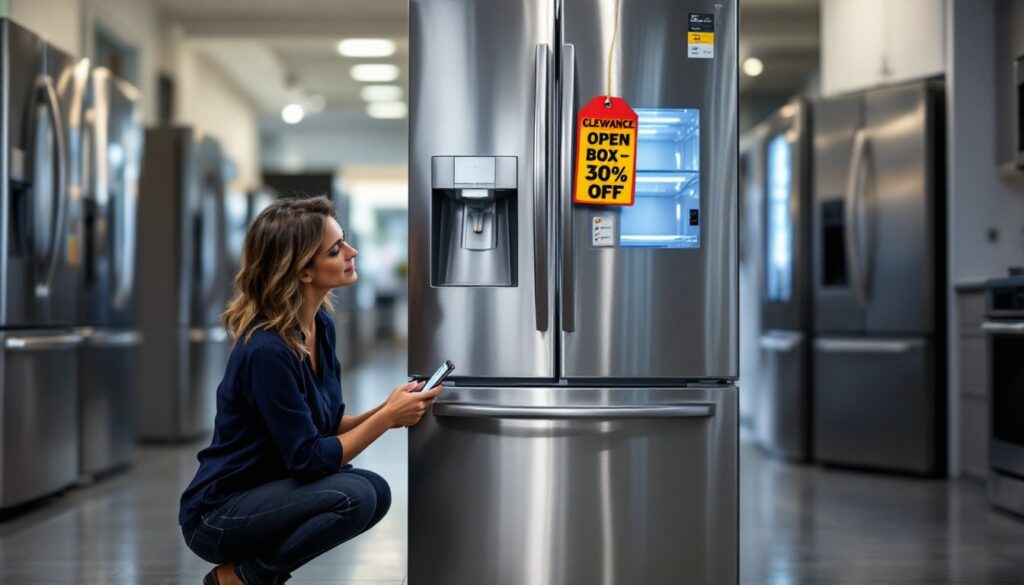
An open box refrigerator is a unit that’s been removed from its original packaging but hasn’t been used in a home long-term. Most fall into one of three buckets:
- Customer returns: Buyer changed their mind, it didn’t fit the space, or they ordered the wrong finish.
- Floor models: Display units from showroom floors that customers have opened, inspected, or slightly handled.
- Shipping damage to packaging: The box took a hit in transit, but the appliance itself is intact.
Retailers can’t sell these as “new,” so they’re moved to clearance or open box inventory. The fridge itself may have never been plugged in, or it might have run on a showroom floor for a few weeks. Either way, it hasn’t lived in someone’s kitchen for years, that would classify it as used or refurbished.
Most big-box stores inspect open box appliances before restocking them. They’ll verify the unit powers on, doors seal properly, and major components (compressor, ice maker, water dispenser) work. But, the depth of that inspection varies by retailer and individual store, so buyer diligence is still critical.
One key distinction: open box is not the same as refurbished. Refurbished units have been repaired or reconditioned, often with replaced parts. Open box items are sold in as-is or like-new condition without significant repair work.
Why Consider Buying an Open Box Refrigerator?
Cost Savings and Value
The headline reason is price. Open box refrigerators typically run 15–40% below retail, depending on condition, brand, and how long the unit has sat in inventory. A $1,800 French-door model might drop to $1,200–$1,400 open box. For a household upgrading multiple appliances or working within a renovation budget, that discount adds up fast.
Beyond raw savings, open box units let buyers access premium features, think dual evaporators, smart connectivity, or built-in water filtration, at mid-tier prices. A unit that was out of budget new may become attainable open box.
Another upside: immediate availability. New appliances often come with lead times of two to eight weeks, especially for custom panel-ready or built-in models. Open box stock is on-hand, sometimes same-day pickup or next-day delivery. That’s a lifesaver if an old fridge just died or a kitchen remodel is on a tight schedule.
Warranty coverage is often still in play. Many manufacturers honor the full factory warranty as long as the original purchase date is documented and the unit hasn’t been registered yet. Some retailers also offer their own protection plans for open box items. Always confirm warranty status at checkout, this isn’t guaranteed across all sellers.
Environmentally, buying open box keeps a working appliance out of the landfill and reduces demand for new manufacturing. It’s a small but tangible move toward reducing household waste.
What to Check Before Purchasing an Open Box Model
Walk into the inspection with a checklist. Don’t rely solely on a store associate’s assurance that “it’s fine.” Here’s what to verify:
Exterior condition:
- Check all surfaces for dents, scratches, or finish damage. Stainless steel shows dings easily, especially on door edges and handles.
- Inspect door seals (gaskets) for tears, warping, or gaps. A poor seal kills efficiency and leads to frost buildup or warm spots.
- Look at hinges and handles. Loose hardware is fixable, but missing parts may require ordering replacements.
Interior condition:
- Open every drawer, shelf, and crisper. Make sure glass shelves aren’t cracked and bins slide smoothly.
- Verify all shelving clips and supports are present. These small plastic pieces are annoying and surprisingly expensive to replace.
- Smell the interior. If there’s a strong chemical or musty odor, it may have been stored improperly or exposed to mold.
Functional tests:
- Plug the unit in if it isn’t already running. Listen for the compressor to cycle on. It should hum quietly, not grind or clatter.
- If it’s a frost-free model, confirm the evaporator fan runs (you’ll hear a gentle whirr from the freezer section).
- Test the ice maker and water dispenser if equipped. Bring a small cup. Check for leaks around the water line connection.
- Verify the thermostat and digital controls respond. Adjust temperature settings and make sure the display updates.
Documentation and accessories:
- Ask for the original manual, warranty card, and any included accessories (water filters, ice trays, door bins). Missing items aren’t deal-breakers, but they affect value.
- Confirm the model number matches the listed specs. Occasionally floor models get mislabeled.
Return policy:
- Understand the store’s return window for open box appliances. Some offer 15–30 days, others sell “as-is, all sales final.” If you can’t return it, the risk goes up.
Take photos of any cosmetic damage before leaving the store. If the unit arrives at your home with new damage, you’ll have proof it happened in transit.
Where to Find the Best Open Box Refrigerator Deals
Big-box retailers are the most reliable source:
- Best Buy: Runs a dedicated open box program with condition ratings (Excellent, Satisfactory, Fair). Ratings correlate to discount depth. Check their website’s open box section and filter by local store inventory.
- Home Depot and Lowe’s: Both carry open box and clearance appliances in-store. Selection varies by location, so call ahead or visit the appliance section to browse.
- Costco: Occasionally lists open box or returned appliances, though availability is spottier. Membership required.
Outlet stores and scratch-and-dent warehouses:
These specialize in cosmetically imperfect or returned appliances. Prices can be even lower than big-box open box, but inspect carefully. Examples include Sears Outlet (still operating in some regions) and independent appliance liquidators.
Manufacturer outlets:
Brands like GE Appliances, Whirlpool, and Samsung run factory outlet stores or online clearance sections. Units may be refurbished, overstock, or returned. Warranty coverage is typically better than third-party sellers.
Online marketplaces:
eBay, Facebook Marketplace, and Craigslist list open box and used fridges. This is higher risk, no store return policy, limited recourse if the unit fails, and you’re responsible for pickup/delivery. Only go this route if you can inspect in person and verify the unit runs.
Timing tips:
Retailers clear appliance inventory hardest in September and October (new models arrive) and around Black Friday/January (post-holiday returns spike). You’ll see the deepest discounts and widest selection during these windows.
Keep an eye on expert-tested refrigerator reviews to identify which models are worth pursuing open box, especially when top-rated options go on clearance.
Potential Drawbacks and How to Avoid Them
Cosmetic imperfections are the most common issue. A ding on the side panel or a scratch on the door may not affect function, but it can bother you every time you walk into the kitchen. Decide upfront how much visible wear you’re willing to accept, especially if the fridge sits in a high-visibility spot.
Limited or no warranty is a real risk with some open box sales. If the manufacturer won’t honor the factory warranty or the retailer sells as-is, you’re on the hook for any repairs. Compressors and sealed systems are expensive to fix, often $400–$800 in parts and labor. If the unit has zero warranty coverage, the discount needs to be steep enough to self-insure that risk.
Missing parts or accessories are annoying but fixable. Order replacements from the manufacturer or third-party suppliers like PartSelect or AppliancePartsPros. Budget an extra $30–$100 if shelves or bins are gone.
Unknown history is the wild card. You don’t know if the unit was returned because it didn’t fit, or because it had a cooling problem the first owner couldn’t diagnose. That’s why functional testing at purchase is non-negotiable.
Delivery and installation concerns: Some retailers charge full delivery fees for open box items, even though you’re getting a discount. Others won’t haul away your old fridge or install water lines for open box purchases. Clarify what’s included before checkout. If you need to hire independent delivery, factor that into your total cost.
Fit and finish mismatches: Double-check dimensions, width, depth, and height with door clearance. Measure your space with a tape measure, not eyeballing. An open box fridge that doesn’t fit is a nightmare to return, especially if the policy is restrictive.
For ideas on making your kitchen layout work with your new appliance, kitchen design resources can help you plan around cabinetry and clearance requirements.
Conclusion
An open box refrigerator isn’t a compromise, it’s a calculated play for value. With the right inspection checklist and a clear sense of what condition you’re willing to accept, buyers can land a high-quality appliance at a fraction of retail. Stick to reputable sellers, confirm warranty terms, and don’t skip the functional tests. If the unit checks out, you’ll walk away with a fridge that performs like new and leaves more budget for the rest of your kitchen project.