
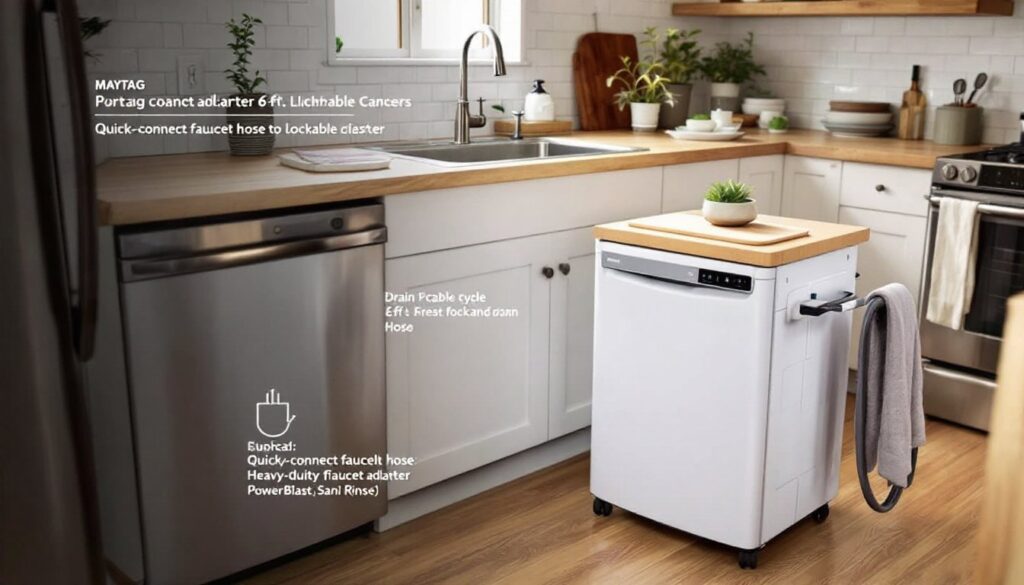

If you’re working with a rental kitchen, a tiny apartment, or a home that wasn’t built with dishwasher hookups, a portable dishwasher can solve your dish-cleaning headaches without breaking into walls or calling a plumber. Maytag’s portable models bring the same cleaning power you’d expect from their built-in units, but with wheels and a quick-connect faucet adapter instead of permanent installation. They’re designed for renters, small-space dwellers, and anyone who needs dishwashing capability without the commitment of a full remodel. This guide walks through what sets Maytag’s portables apart, how to set one up, and whether one fits your particular kitchen situation.
Table of Contents
ToggleKey Takeaways
- Maytag portable dishwashers deliver built-in cleaning performance with the same PowerBlast cycle and stainless steel tub found in full-size models, making them ideal for renters and small-space kitchens without requiring permanent plumbing.
- A Maytag portable dishwasher requires only a compatible faucet, 120V outlet within 6 feet, and 24-inch width clearance—installation takes about 10 minutes with no professional plumber needed.
- The Hard Food Disposer eliminates pre-rinsing requirements by grinding food particles, though you still need to scrape plates and rinse the removable filter weekly for optimal performance.
- Water usage averages 3.5–4.5 gallons per cycle with ENERGY STAR-qualified models consuming around 270–290 kWh annually, making portables more efficient than hand-washing full loads.
- Monthly hose inspections, quarterly descaling with white vinegar for hard water areas, and regular door seal wiping keep Maytag portable dishwashers running smoothly for years.
- At $600–$900, a Maytag portable costs less than installation of a built-in unit and works best for households of 1–4 people, renters, and those needing flexible kitchen solutions.
What Makes Maytag Portable Dishwashers Stand Out
Maytag builds portable dishwashers with the same wash systems found in their full-size, built-in models, meaning you’re not sacrificing cleaning performance for portability. The PowerBlast cycle uses high-pressure spray jets and increased water temperature to tackle baked-on casserole dishes and dried pasta pans, something cheaper portables struggle with.
These units are built around a stainless steel tub, which resists stains, holds heat better than plastic interiors, and contributes to better drying results. The tub also handles higher water temperatures without warping, which matters during sanitize cycles.
Most Maytag portables include a Hard Food Disposer with removable filter. This grinds up small food particles instead of recirculating them onto your dishes or clogging the drain pump. You’ll still need to scrape plates, but you won’t need to pre-rinse every fork.
The casters are heavy-duty and lockable. These aren’t furniture wheels, they’re designed to roll a water-filled appliance across uneven flooring without tipping. The butcher-block or stainless steel top doubles as extra prep space when the unit isn’t running, which matters in compact kitchens where every square inch counts.
Key Features and Specifications
Maytag portables typically measure around 24 inches wide, 25 inches deep, and 36 inches tall, about the size of a small kitchen cart. That footprint fits 12 place settings, comparable to many built-in dishwashers. Check your floor-to-counter clearance: you’ll need a few inches of wiggle room to roll the unit into position.
Most models offer four to six wash cycles, including Normal, Heavy, Light, and Rinse-Only. The High-Temp Wash option boosts water temperature to around 130–140°F, which helps dissolve grease and sanitize loads. Some models include a Sani Rinse cycle certified to NSF/ANSI Standard 184, raising the final rinse temperature high enough to reduce bacteria by 99.999%.
Water consumption runs about 3.5 to 4.5 gallons per cycle, depending on the wash program selected. That’s less than hand-washing a full load in the sink, and significantly less than older dishwashers. Energy use averages around 270–290 kWh annually, qualifying for ENERGY STAR certification on many models.
Noise levels sit around 55–60 dBA during operation. That’s quieter than a normal conversation but louder than premium built-in models with extra insulation. If you’re running it during dinner prep, expect to hear it.
The quick-connect faucet adapter works with most standard kitchen faucets (not pull-out or spray styles). The adapter threads onto the faucet aerator, and a 6-foot inlet hose connects the adapter to the dishwasher’s water valve. The drain hose empties directly into the sink.
Installation and Setup Made Simple
Portable dishwashers don’t require permanent plumbing or electrical work, but you still need compatible hookups. Here’s what to check before you buy:
Faucet Compatibility: The quick-connect adapter fits threaded faucet spouts with standard aerators (15/16-inch or 55/64-inch threads). Pull-down, pull-out, and handheld sprayers typically won’t work. If your faucet isn’t compatible, you can replace the aerator with a dual-thread adapter (available at hardware stores for under $10) or install a separate faucet-mount valve.
Electrical Requirements: Maytag portables run on 120V, 15-amp household circuits. Use a grounded three-prong outlet, never an extension cord or adapter plug. The power cord is usually around 6 feet long, so the outlet needs to be within reach of where you’ll park the unit.
Floor Space and Clearance: Measure the path from storage to sink. The unit needs to roll freely without catching on rugs, thresholds, or cabinet overhangs. Leave at least 2 inches of clearance on the sides and back for proper ventilation during operation.
Setup Steps:
- Position the dishwasher near the sink, with the drain hose able to reach the sink basin without kinking.
- Attach the faucet adapter by unscrewing the existing aerator and threading on the quick-connect fitting. Hand-tighten: you shouldn’t need pliers.
- Connect the inlet hose to the adapter, then turn the adapter valve to the “on” position. Water should flow only when the dishwasher calls for it.
- Hang the drain hose over the edge of the sink, securing it with the provided clip or a towel to prevent it from slipping.
- Plug in the unit and lock the casters to prevent rolling during operation.
Some kitchen layouts work better with a semi-permanent adapter left on the faucet. Check smart home tech options if you want to integrate remote monitoring or leak detection sensors, though most DIYers won’t need that level of automation for a simple portable unit.
Performance and Cleaning Capabilities
Maytag’s wash performance leans on the same PowerDry system used in built-ins, which combines hot water and a fan-assisted drying cycle. You’ll still see some moisture on plastic items (physics: plastic cools faster than glass or ceramic), but metal and dishware come out dry.
The PowerBlast cycle is the standout feature. It adds 40 minutes to the wash time but uses high-pressure jets and extended spray patterns to handle stuck-on food. Testing by independent home product reviewers consistently shows Maytag portables removing baked cheese, dried oatmeal, and egg residue without pre-scrubbing.
Rack configuration matters. The upper rack adjusts to two heights, letting you fit tall glasses on the bottom or stack bowls and plates more efficiently. Fold-down tines in the lower rack accommodate large pans and baking sheets. You won’t fit a full-size cookie sheet flat, but a half-sheet pan fits diagonally.
Water pressure affects results. If your home has low water pressure (below 20 psi), the dishwasher may take longer to fill and wash cycles may extend. High water pressure (above 120 psi) can cause the inlet valve to leak or the hose to disconnect. Most municipal water systems run between 40–70 psi, which is ideal.
The Hard Food Disposer handles small particles (rice grains, crumbs, soft vegetable bits) but not bones, fruit pits, or large chunks. Scrape plates into the trash or compost before loading. The removable filter should be rinsed weekly to prevent buildup and odors.
Maintenance Tips for Long-Lasting Performance
Portable dishwashers take more wear than built-ins because of the repeated connection/disconnection cycle and the vibration from rolling. Here’s how to keep one running:
Clean the filter every week. Remove the lower rack, twist out the cylindrical filter assembly, and rinse it under hot tap water. Use a soft brush to clear debris from the screen. A clogged filter reduces spray pressure and leaves food residue on dishes.
Inspect hoses monthly. Check the inlet and drain hoses for cracks, kinks, or brittleness. Replace any hose showing wear, a burst inlet hose can flood your kitchen in minutes. Replacement hoses run $15–$25 and are available through Maytag parts suppliers or appliance repair shops.
Descale every 3–6 months if you have hard water. Run an empty cycle with a dishwasher cleaner or a cup of white vinegar placed on the top rack. This removes mineral buildup on the heating element and spray arms. You’ll see better drying and fewer spots on glassware.
Wipe down door seals. Food particles and detergent residue accumulate in the rubber gasket around the door. A damp cloth once a week prevents mold and keeps the seal tight.
Check the faucet adapter. Over time, the rubber washers inside the quick-connect fitting compress and leak. If you see dripping during operation, replace the washer (usually included with the adapter) or buy a new adapter assembly.
Store properly when not in use. If you disconnect the unit between uses, drain any residual water by running a short rinse cycle, then leave the door cracked open to air out the interior. This prevents musty odors and mold growth.
Many kitchen organization enthusiasts recommend keeping a small bin near the dishwasher for scraping plates, which cuts down on the filter maintenance workload and keeps the appliance cleaner between deep cleanings.
Is a Maytag Portable Dishwasher Right for Your Home?
Portable dishwashers make sense in specific situations. Here’s when they’re worth it, and when they’re not.
Good fit if you:
- Rent and can’t modify plumbing. Portables require no permanent hookups, so they move with you.
- Have an existing faucet and outlet near the sink. Setup takes 10 minutes if your kitchen already has compatible connections.
- Need extra counter space. The top surface handles meal prep when the dishwasher isn’t running.
- Wash dishes for 1–4 people. A 12-place-setting capacity covers daily loads for small households without running half-full cycles.
- Want upgrade potential. Some Maytag portables convert to under-counter built-ins with a conversion kit (sold separately), adding resale value if you move to a permanent kitchen.
Not ideal if you:
- Have a pull-out or spray faucet. You’ll need to replace the faucet or add a separate connection point, which adds cost and complexity.
- Lack floor space. The unit needs permanent or semi-permanent parking when not in use, plus a clear path to the sink.
- Run large loads frequently. Families of five or more will outgrow the capacity quickly and end up running multiple cycles per day.
- Live in an area with very hard water. Portable dishwashers are more vulnerable to mineral buildup because of the shorter hose runs and smaller filters. You’ll need a water softener or more frequent descaling.
Cost Considerations: Maytag portable dishwashers typically run $600–$900, depending on features and finish. That’s more than budget portables ($350–$500) but less than mid-range built-ins ($700–$1,200 before installation). Factor in that you’re saving the $150–$300 installation cost a plumber would charge for a built-in.
If you’re planning a kitchen remodel within a year or two, a portable can serve as a stopgap until you’re ready to commit to permanent appliances. If this is a long-term solution, make sure your kitchen layout supports the daily routine of rolling, connecting, running, and disconnecting the unit.
Conclusion
Maytag portable dishwashers deliver built-in cleaning power without the built-in commitment. They fit rental kitchens, small spaces, and situations where permanent plumbing isn’t an option. With proper setup, regular filter cleaning, and hose inspection, they’ll handle daily dish loads for years. If your kitchen has a compatible faucet, a nearby outlet, and floor space for a rolling cart, a Maytag portable is a practical upgrade over hand-washing.