
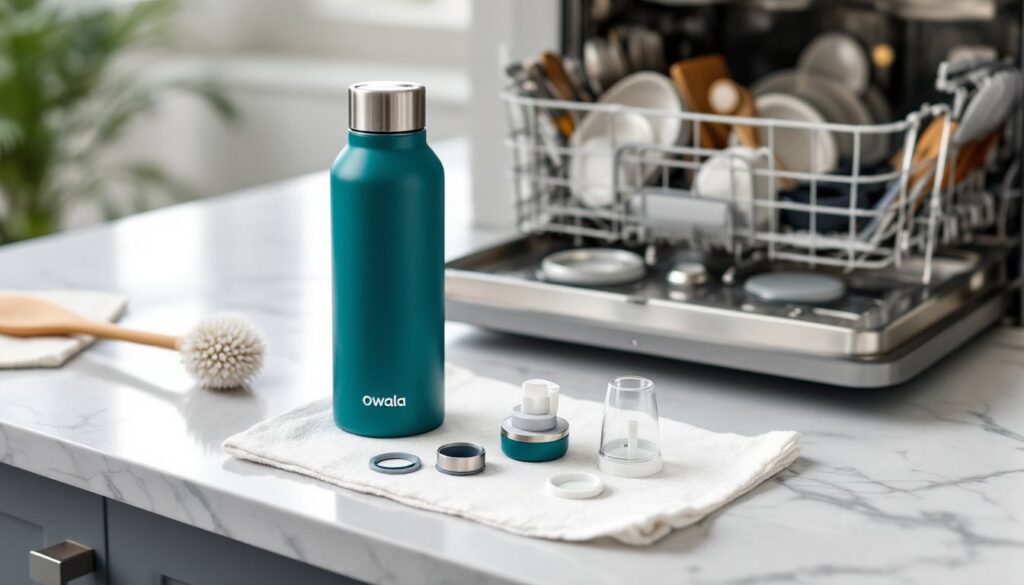

If you’ve dropped $30+ on an Owala bottle, you’re probably wondering whether tossing it in the dishwasher will wreck it. The short answer: mostly yes, but with some important exceptions. Owala bottles use a mix of materials, stainless steel bodies, silicone gaskets, and plastic lids with moving parts, that respond differently to high heat and detergent cycles. Getting the cleaning method wrong can lead to warped seals, damaged insulation, or a lid that won’t stay sealed. This guide breaks down exactly which parts can handle the dishwasher, how to clean them properly, and what mistakes to avoid so your bottle keeps performing for years.
Table of Contents
ToggleKey Takeaways
- Owala water bottles are mostly not dishwasher safe—the stainless steel body and vacuum seal will be damaged by high heat, but lids and most lid components are safe on the top rack.
- Proper cleaning requires disassembling the FreeSip lid completely, placing parts in a mesh bag on the top rack, skipping the heated dry cycle, and using only mild detergent to protect silicone gaskets.
- For maximum longevity, hand wash the bottle body after each use (takes 30 seconds) and run the dishwasher-safe lid components once or twice weekly to balance convenience with preserving insulation and finish.
- Common mistakes that damage Owala bottles include leaving the lid assembled in the dishwasher, using the sanitize cycle, putting the body in the machine, and neglecting gasket replacement every 6–12 months.
- Store your Owala bottle with the lid off when not in use, inspect seals monthly, and use baking soda monthly for deep cleaning to prevent mold, odors, and bacterial growth.
- If insulation is lost or the vacuum seal is compromised, the bottle cannot be repaired—contact Owala customer service as warranty coverage typically does not apply after dishwashing the body.
Understanding Owala’s Dishwasher Safety Guidelines
Owala’s official care instructions are specific: the bottle body and base are not dishwasher safe, but the lid and most lid components can go on the top rack. The stainless steel double-wall construction relies on a vacuum seal between layers to maintain insulation. Exposing that to the dishwasher’s high-heat dry cycle can compromise the seal, leading to condensation between walls or total loss of temperature retention.
The powder-coated exterior is another concern. Dishwasher detergent is abrasive, it’s formulated to break down baked-on food, not protect decorative finishes. Repeated exposure causes fading, chipping, or a chalky residue that won’t wash off. If you value the color and finish, keep the body out of the machine.
Which Owala Parts Are Dishwasher Safe
Top-rack dishwasher safe:
- FreeSip lid assembly (spout, push-button mechanism, hinged cover)
- FreeSip straw and straw cap
- Base cap (if removable on your model)
- Silicone gaskets and seals
Hand wash only:
- Stainless steel bottle body
- Any copper-lined or special-finish bottles
- Owala Kids bottles (some models have different materials)
Before running a load, disassemble the lid completely. The FreeSip design has a push-button valve, a hinged spout cover, and a removable straw, each needs exposure to water to rinse away trapped liquid and prevent mold. Leaving it assembled traps moisture in crevices where detergent can’t reach. A product review from Good Housekeeping confirmed that the lid’s multi-part design requires full disassembly for effective cleaning.
Best Practices for Dishwashing Your Owala Bottle
If you’re putting the lid in the dishwasher, follow these steps to avoid damage:
-
Disassemble the lid fully. Remove the straw, pop out the silicone gasket, and separate the spout cover if it detaches. Small parts can fall through dishwasher racks, so use a mesh silverware bag or utensil basket with a lid.
-
Top rack only. The heating element sits at the bottom of most dishwashers. Placing plastic components on the bottom rack can warp them. Ensure pieces aren’t touching the rack’s metal bars directly, trapped heat causes melting or deformation.
-
Skip the heated dry cycle. If your dishwasher has an air-dry or eco-dry setting, use it. High heat accelerates wear on silicone seals and can distort plastic threads.
-
Use a mild detergent. Avoid formulas with heavy degreasers, bleach additives, or lemon extracts. These can degrade silicone over time, making gaskets brittle. Standard powder or gel detergents work fine.
-
Rinse before loading. If you’ve had anything other than water in the bottle, coffee, protein shakes, electrolyte mixes, rinse components immediately. Sugars and proteins bond to plastic and silicone, and dishwashers don’t always remove them completely. You’ll end up with a lingering smell or cloudy residue.
For the bottle body, hand washing is non-negotiable. Use warm water, a few drops of dish soap, and a bottle brush with a long handle. Nylon bristles work better than sponge-style brushes because they reach the shoulder where the neck narrows. Rinse thoroughly, soap residue tastes awful and can cause stomach upset if ingested over time.
Hand Washing vs. Dishwasher: What’s Better for Your Owala?
From a longevity standpoint, hand washing the entire bottle is the safer choice. It’s gentler on finishes, gives you control over water temperature, and lets you inspect seals and threads for wear. But realistically, most people won’t hand wash daily, that’s why dishwashers exist.
If time is limited, a hybrid approach works well: hand wash the body after each use (takes about 30 seconds), and run the lid through the dishwasher once or twice a week. This balances convenience with care. The lid components are the most prone to buildup because they have moving parts and tight tolerances. Dishwashers excel at flushing out those hidden pockets.
One downside to hand washing the lid is missing spots. The FreeSip straw, for instance, has a narrow interior that’s tough to scrub without a dedicated straw brush (a thin nylon brush about 10 inches long). If you don’t have one, the dishwasher’s spray jets do a better job.
Temperature retention is another factor. A bottle that’s been dishwashed repeatedly may lose 10–15% of its insulating ability over six months due to micro-damage to the vacuum seal. If you rely on your Owala to keep iced coffee cold for eight hours or soup hot through lunch, hand washing the body preserves that performance. For casual users who refill with room-temp water throughout the day, the difference is negligible.
Consider your water quality, too. Hard water leaves mineral deposits that show up as white film on stainless steel. Dishwashers with heated dry cycles bake those minerals on, making them harder to remove. If you have hard water, hand washing with a vinegar rinse (one part white vinegar to three parts water) prevents buildup and keeps the interior looking new.
Common Mistakes That Can Damage Your Owala in the Dishwasher
Leaving the lid assembled. This is the number-one cleaning mistake. Water can’t reach the valve mechanism or the underside of the gasket when parts are stacked. You’ll end up with mildew or a funky smell that won’t go away even after multiple washes.
Putting the bottle body in the dishwasher. Even once. The heat cycle can break the vacuum seal or cause the inner and outer walls to separate slightly, which ruins insulation. Some users report a rattling sound after dishwashing, that’s the broken seal.
Using the sanitize cycle. Many dishwashers have a high-temp sanitize option that hits 150–165°F. That’s well above the safe range for most plastics and will warp the lid threads or spout. Standard wash cycles (120–140°F) are hot enough to clean without causing damage.
Overloading the top rack. When lids and gaskets are crammed together, they block spray arms and don’t get clean. Worse, they can trap heat, leading to melting or fusing. Give each piece space.
Ignoring the care label. Some Owala models, especially limited editions or collaborations, use different materials. If your bottle has a rubberized grip or a decorative wrap, check the base or inside the lid for specific washing instructions. When in doubt, hand wash.
Skipping regular gasket replacement. Silicone seals wear out. If yours has been through the dishwasher 50+ times, it’s likely compressed, cracked, or no longer sealing properly. Owala sells replacement gaskets for around $5–$8. Swap them every 6–12 months depending on use.
How to Extend the Life of Your Owala Water Bottle
Beyond cleaning method, a few habits make a big difference:
Dry components completely before reassembling. Moisture trapped in threads or under gaskets promotes bacterial growth and corrosion. After washing (by hand or machine), shake out excess water and let parts air-dry on a clean towel for at least an hour. If you’re in a rush, wipe down with a lint-free cloth.
Avoid extreme temperature swings. Don’t fill a cold bottle with boiling liquid or vice versa. Rapid expansion and contraction stress the materials and can crack welds or seals. Owala bottles are rated for liquids up to 194°F, but gradual temperature changes are gentler.
Store with the lid off. When not in use, leave the bottle open to let air circulate. Sealing a damp bottle creates a perfect environment for mold, especially if there’s any residue left inside. This applies to kitchen storage principles across the board, airflow prevents odors and microbial growth.
Inspect seals monthly. Pull out the silicone gasket and check for cracks, discoloration, or a slimy feel. If it’s degraded, replace it. A faulty seal leads to leaks, which ruins bags and defeats the purpose of a spill-proof bottle.
Use baking soda for deep cleaning. Once a month, fill the bottle halfway with warm water, add two tablespoons of baking soda, and let it sit overnight. The alkaline solution neutralizes odors and lifts stains without scratching the interior. Rinse thoroughly in the morning.
Avoid abrasive scrubbers. Steel wool, scouring pads, and stiff brushes scratch stainless steel, creating micro-grooves where bacteria hide. Stick to soft-bristle brushes or non-scratch sponges.
Troubleshooting Owala Bottle Issues After Dishwashing
Lid won’t seal or leaks: The gasket probably shifted or warped. Remove it, inspect for damage, and reseat it evenly in the groove. If it’s deformed, order a replacement. Misaligned gaskets are the most common post-dishwasher complaint.
Cloudy or filmy interior: This is mineral buildup from hard water or detergent residue. Fill the bottle with equal parts white vinegar and water, let it sit for two hours, then scrub with a bottle brush and rinse. For stubborn film, use a denture-cleaning tablet (like Efferdent), drop one in warm water, let it fizz for 15 minutes, and rinse.
Loss of insulation: If your bottle no longer keeps drinks cold or hot, the vacuum seal is compromised. This can’t be repaired. Contact Owala’s customer service, they may replace it under warranty if the damage resulted from a manufacturing defect, but dishwashing the body usually voids coverage.
Discolored or faded exterior: Once the powder coat is damaged, there’s no fix. You can slow further degradation by switching to hand washing and using a gentle dish soap. Some users apply a clear vinyl wrap or decal to cover faded areas, but that’s purely cosmetic.
Stuck or stiff push button: Detergent buildup or warped plastic. Disassemble the lid, soak the button mechanism in warm water with a drop of dish soap for 10 minutes, then work it back and forth to loosen residue. Dry thoroughly before reassembling. If it’s still sticky, the plastic may have warped, contact Owala for a replacement lid.
Moldy smell that won’t go away: Mold has likely colonized the straw or valve. Soak all components in a solution of one tablespoon bleach per gallon of water for five minutes (no longer, bleach degrades silicone). Rinse exhaustively. If the smell persists, replace the straw and gasket. For advice on tackling stubborn home odors, design and remodeling resources often cover similar cleaning challenges in kitchen and bath applications.