
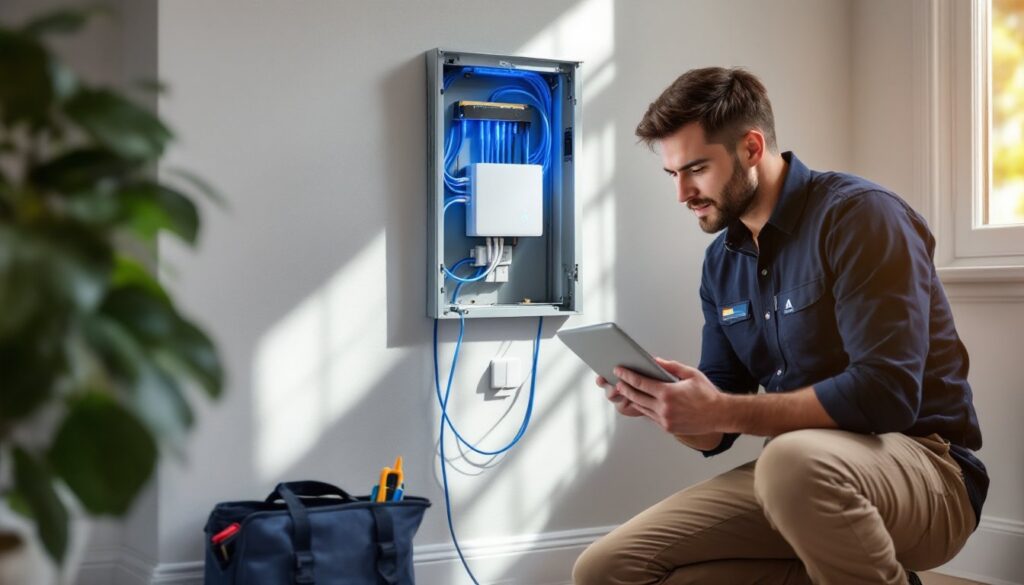

Installing smart devices might seem like plug-and-play territory, but anyone who’s tried hardwiring a smart thermostat or adding a dozen low-voltage circuits for motorized shades knows better. A smart home electrician specializes in the electrical infrastructure that powers connected devices, from dedicated circuits for whole-home hubs to the wiring needed for networked lighting and security systems. They’re not just pulling wire, they’re integrating technology with your home’s electrical system in ways that meet code, protect your investment, and actually work when you tap that app. Here’s what you need to know before hiring one.
Table of Contents
ToggleKey Takeaways
- A smart home electrician specializes in low-voltage systems, network infrastructure, and electrical integration of connected devices—work that goes far beyond simple plug-and-play installation.
- Hire a licensed smart home electrician for projects requiring wall openings, circuit additions, panel modifications, or hardwired devices like video doorbells and smart thermostats to ensure code compliance and proper integration.
- Verify state electrical licenses, look for CEDIA or manufacturer certifications, confirm insurance coverage, and ask about experience with your specific project type before hiring.
- Expect to pay $75–$150 per hour for licensed electricians, with project costs ranging from $200–$400 for simple circuits to $3,000–$8,000 for comprehensive structured wiring in larger homes.
- Common smart home electrical projects include lighting system installation, whole-home audio and video, security camera hardwiring, thermostat upgrades, EV charger installation, and motorized window treatments—each with unique wiring and power requirements.
- Always use a licensed smart home electrician who pulls permits and schedules inspections, as unpermitted electrical work can void insurance claims and complicate future home sales.
What Is a Smart Home Electrician and What Do They Do?
A smart home electrician is a licensed electrician with specialized knowledge in low-voltage systems, network infrastructure, and the electrical requirements of connected devices. They handle everything a standard electrician does, circuit installation, panel upgrades, code compliance, but they also understand how smart devices communicate, what kind of power they need, and how to integrate them without creating a rats’ nest of adapters and power strips.
Their work often includes installing dedicated circuits for equipment racks, running structured wiring (Cat6, coax, speaker wire), setting up smart lighting systems that require neutral wires or specific load types, and ensuring that your home’s electrical panel can handle the added demand. Many smart devices draw minimal power individually, but when you’re running a dozen cameras, multiple hubs, motorized window treatments, and a whole-home audio system, the cumulative load adds up.
They also troubleshoot integration issues. For example, some smart switches require a neutral wire, which older homes often lack in switch boxes. A smart home electrician can either retrofit neutrals or recommend compatible no-neutral switches. They know the difference between a Zigbee mesh network and a Wi-Fi-based system, and they can advise on whether your setup needs a separate network backbone or additional access points.
When Do You Need a Smart Home Electrician?
You’ll want to bring in a smart home electrician whenever your project involves opening walls, adding circuits, or modifying your electrical panel. DIY installation of battery-powered sensors or plug-in smart bulbs is one thing: hardwiring a video doorbell with a transformer that meets its voltage requirements is another.
Here are common scenarios that call for a pro:
- Whole-home automation systems that require a central hub, multiple zones, or integrated lighting control
- Smart thermostat installation when your HVAC system uses a heat pump, multi-stage heating, or lacks a C-wire (common wire) for continuous power
- Motorized shades or blinds that need low-voltage wiring run through walls or ceilings
- Outdoor smart lighting or security cameras that require weatherproof junction boxes and GFCI-protected circuits
- Panel upgrades to accommodate the increased circuit demand of a fully connected home
- Structured wiring installations during new construction or major renovations, including home runs for network, video, and audio
If your municipality requires permits for electrical work (most do for anything beyond device replacement), hiring a licensed electrician ensures the work is inspected and insured. Many homeowners discover modern automation techniques require more infrastructure than anticipated, making professional installation a smart move.
Key Qualifications to Look for in a Smart Home Electrician
Start with the baseline: a valid state electrical license. In most states, this requires years of apprenticeship, passing a licensing exam, and continuing education. Verify the license number through your state’s contractor licensing board, it takes five minutes and weeds out unlicensed operators.
Beyond the license, look for certifications in smart home integration. CEDIA (Custom Electronic Design & Installation Association) offers training and certification for professionals who design and install integrated systems. While not required, it’s a good indicator that the electrician has invested in learning the technology side of the job. Some electricians also hold certifications from manufacturers like Control4, Lutron, or Crestron, which involve hands-on training with specific product lines.
Insurance matters. Ask for proof of both general liability and workers’ compensation coverage. Electrical work carries risk, and you don’t want to be on the hook if someone gets hurt or a mistake causes property damage.
Experience with your specific project type is a plus. If you’re installing a distributed audio system, find someone who’s done it before and can discuss speaker placement, impedance matching, and amplifier sizing. An electrician who mostly wires new construction may not be the best fit for retrofitting smart switches into a century-old home with knob-and-tube wiring.
How to Find and Hire a Qualified Smart Home Electrician
Word of mouth still works. Ask neighbors, your HVAC contractor, or local home builders if they know a good smart home electrician. Trade professionals often have a shortlist of specialists they trust for complex jobs.
Online directories like Angi (formerly Angie’s List), HomeAdvisor, or Thumbtack can surface local candidates, but treat reviews with a critical eye. Look for detailed feedback on similar projects, not just star ratings. When researching smart home professionals, you’ll find that experience with specific technologies matters as much as electrical skill.
Once you’ve got a few names, request detailed written estimates. A solid estimate breaks down labor, materials, permits, and any required inspections. It should also specify the scope: how many circuits, which devices are included, who’s responsible for programming, and what happens if the project uncovers issues (like an undersized panel or missing neutral wires).
Ask questions during the consultation:
- How many similar projects have you completed?
- Will you pull permits and schedule inspections?
- What’s your preferred smart home ecosystem, and why?
- Do you offer any warranty on labor? (Many pros offer a one-year warranty on workmanship.)
- What happens if a device fails or needs reconfiguration after installation?
Get at least three estimates. If one is drastically lower, it might signal cut corners or unlicensed work. The cheapest bid isn’t always the best value.
Some homeowners explore professional installation services for comprehensive smart home setups, especially when integrating multiple systems like security, lighting, and climate control.
Cost Considerations for Smart Home Electrical Work
Pricing varies widely based on project scope, regional labor rates, and the complexity of your home’s existing wiring. As of 2026, expect to pay between $75 and $150 per hour for a licensed electrician in most U.S. markets, with higher rates in major metros and for specialists with CEDIA or manufacturer certifications.
Simple projects like adding a dedicated 20-amp circuit for a network rack might run $200 to $400, assuming easy attic or basement access. Installing a smart lighting system in a three-bedroom home can range from $1,500 to $5,000, depending on the number of switches, whether you need to retrofit neutral wires, and the product line (budget switches vs. a full Lutron Caséta or RadioRA system).
Panel upgrades add cost. If your home has a 100-amp panel and you’re adding significant smart home load, upgrading to 200 amps can run $2,000 to $4,000, including permits and utility coordination. Structured wiring for a new build or major remodel, where you’re running Cat6 to every room, coax for video distribution, and speaker wire for whole-home audio, typically costs $3,000 to $8,000 for a 2,000-square-foot home.
Permit fees vary by jurisdiction but usually range from $50 to $200 per permit. Some municipalities require separate permits for low-voltage and line-voltage work. Many electricians include permit costs in their estimates, but confirm upfront.
Materials can swing the budget. Budget-friendly smart switches might cost $20 each, while high-end dimmers with advanced features run $80 or more. Motorized shades can cost anywhere from $300 to $1,200 per window, depending on size and fabric.
Don’t skip the consultation fee if an electrician charges one (typically $100 to $200). It’s often credited toward the project if you hire them, and it buys you expert advice on whether your plan is feasible and what hidden costs might lurk.
Common Smart Home Electrical Projects and Upgrades
Smart Lighting Installation: This is the most popular entry point for home automation. It typically involves replacing standard switches with smart dimmers or switches that connect to a hub or Wi-Fi network. Homes built before the 1980s often lack neutral wires in switch boxes, requiring either rewiring or the use of specific automation solutions designed for no-neutral installations. Expect to provide safety goggles and possibly a voltage tester if you’re observing the work.
Whole-Home Audio and Video: Running speaker wire and HDMI cables through walls is labor-intensive but worth it for a clean installation. A smart home electrician will plan wire routes that avoid crossing electrical lines at sharp angles (to minimize interference) and install back boxes or mud rings at each endpoint for a finished look. They’ll also size amplifiers and ensure the electrical circuit can handle the load.
Security System Hardwiring: While many modern security cameras use Wi-Fi, hardwired Power over Ethernet (PoE) cameras offer more reliable performance and don’t eat into Wi-Fi bandwidth. This requires running Cat6 cable from a PoE switch (which needs its own dedicated circuit) to each camera location. Outdoor cameras need weatherproof junction boxes and GFCI protection per NEC Article 210.8.
Smart Thermostat and HVAC Integration: Upgrading to a smart thermostat often reveals that your HVAC system lacks a C-wire, which provides continuous 24V power. A smart home electrician can install a C-wire adapter at the furnace or air handler, or rewire the thermostat circuit to include one. Heat pump systems and multi-stage setups require careful configuration to avoid damaging the equipment.
EV Charger Installation: Many homeowners are adding electric vehicle charging as part of their connected home upgrades. A Level 2 EV charger typically requires a 240V, 40- to 50-amp dedicated circuit, which may necessitate a panel upgrade if capacity is tight. Some chargers integrate with home automation systems, allowing you to schedule charging during off-peak hours.
Motorized Window Treatments: Motorized shades and blinds need low-voltage wiring (typically 12V or 24V DC) run from a transformer to each motor. The electrician will plan wire routes that hide inside window frames or crown molding. Battery-powered options exist but require regular recharging or battery swaps, which most homeowners find annoying.
Network Infrastructure: A robust home network is the backbone of any smart home. This often means installing a central equipment rack in a utility room or closet, running Cat6 cable to access points throughout the home, and ensuring the rack has a dedicated 15- or 20-amp circuit. Proper cable management, labeling, and using a patch panel makes future troubleshooting far easier. For homes interested in exploring broader smart technologies, a professional network setup is foundational.
Permit and Code Considerations: Most electrical work requires a permit and inspection, even for low-voltage installations in some jurisdictions. Work done without permits can complicate home sales and void insurance claims if a fire occurs. A licensed electrician handles permitting and knows local amendments to the NEC (National Electrical Code). For example, AFCI (Arc Fault Circuit Interrupter) protection is now required for most 15- and 20-amp circuits in living areas, and some smart switches don’t play well with AFCI breakers, causing nuisance tripping.
Conclusion
Hiring a smart home electrician isn’t just about avoiding a DIY disaster, it’s about building a system that works reliably, meets code, and can grow with your needs. The right pro brings both electrical expertise and an understanding of how connected devices actually behave in the real world, not just on a spec sheet. Get multiple quotes, verify credentials, and don’t skip the permit process. Done right, a professionally installed smart home pays dividends in convenience, efficiency, and resale value.