
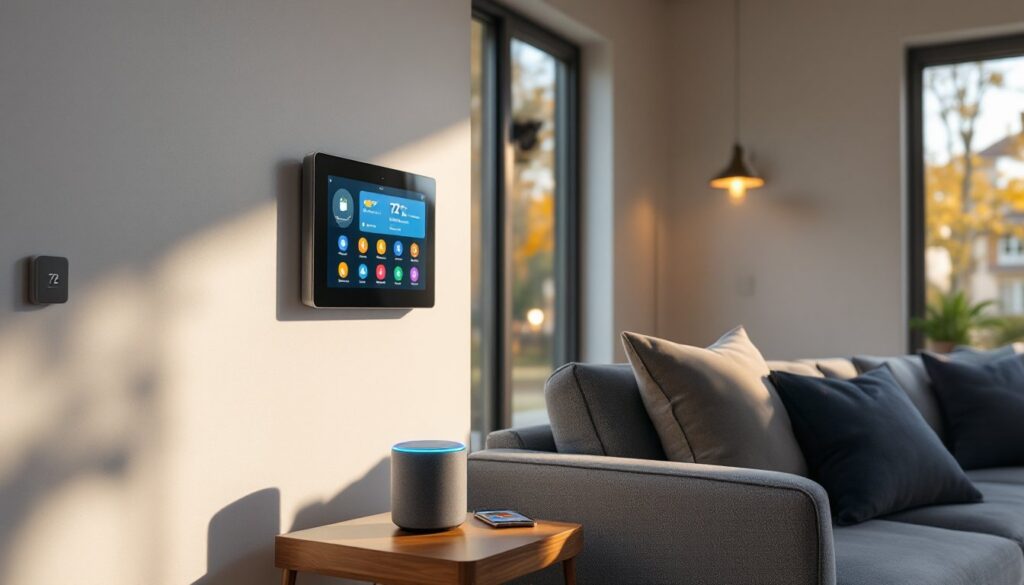

The smart home market has shifted from novelty to necessity. What started as voice-activated light switches has evolved into sophisticated ecosystems that learn routines, predict problems, and cut operating costs. In 2026, the focus isn’t just connectivity, it’s intelligence that actually earns its keep. Whether rewiring an older home or spec’ing out new construction, today’s smart systems offer tangible returns on investment through energy savings, security upgrades, and automation that doesn’t require a computer science degree to operate. This guide breaks down the innovations worth the money and the hype you can skip.
Table of Contents
ToggleKey Takeaways
- Smart home innovations have evolved from novelty gadgets to practical systems that deliver measurable ROI through energy savings, enhanced security, and reduced operational costs.
- AI-powered home assistants now understand context and user patterns, automatically suggesting automations like dimming lights during routine evening tasks without requiring advanced technical skills.
- Energy management systems can cut utility bills in half by monitoring individual circuits and shifting heavy loads like EV charging to off-peak hours, typically paying for themselves within 18 months.
- Next-generation security cameras use on-device AI to recognize behavioral patterns and distinguish between delivery drivers and potential threats, eliminating false alarms from pets and regular visitors.
- Circadian lighting systems automatically adjust color temperature throughout the day to match natural light cycles, improving sleep quality and alertness without manual intervention.
- Budget-friendly smart upgrades like intelligent plugs, video doorbells, and door sensors offer immediate value for under $100, making them ideal entry points before investing in whole-home integration systems.
AI-Powered Home Assistants That Actually Understand Context
The latest generation of home assistants moved beyond simple command recognition to genuine contextual awareness. Google Home’s Gemini integration and Amazon’s Alexa 2.0 now interpret follow-up questions, remember room-specific preferences, and distinguish between household members without needing separate wake words.
These systems track patterns over weeks, not days. If someone consistently dims the kitchen lights at 8 p.m. while running the dishwasher, the assistant suggests automating that sequence. The difference from earlier versions is nuance, asking “Is it cold in here?” triggers both a temperature reading and an offer to adjust the thermostat, rather than just a weather report.
Installation remains straightforward for DIYers comfortable with basic electrical work. Most units require only a standard 15-amp circuit and Wi-Fi with at least 25 Mbps upload speed for reliable voice processing. Wall-mounted models need backing into a stud or use of heavy-duty drywall anchors rated for 10+ pounds.
The privacy trade-off is real. These devices process more ambient audio to build context, though reputable manufacturers now offer local processing modes that keep voice data on-device. Check whether your model supports Matter protocol, the new unified standard that lets devices from different brands communicate without cloud dependency.
Energy Management Systems That Cut Utility Bills in Half
Whole-home energy management platforms like Sense and Emporia Vue monitor electrical usage at the circuit level, identifying vampire loads and inefficient appliances in real time. These aren’t simple smart thermostats, they’re comprehensive systems that track every electron flowing through your main service panel.
Installation requires working inside a live panel, so this is a job for a licensed electrician unless you hold the appropriate credentials. The monitoring hardware clamps onto the main service conductors (typically 200-amp or 400-amp residential services) and connects to individual branch circuits via current transformers (CTs). Permit requirements vary, but many jurisdictions treat panel modifications as requiring inspection per NEC Article 110.
The payoff is granular control. Users report identifying that an aging HVAC blower motor was drawing 40% more power than spec, or that a second refrigerator in the garage cost $180 annually to run. The system learns baseline consumption and flags anomalies, like a water heater element failing in the “always on” position.
Integration with time-of-use utility rates lets the system shift heavy loads (EV charging, pool pumps, electric water heaters) to off-peak hours automatically. Homeowners in markets with dynamic pricing structures see the fastest ROI, often recouping the $300-$500 hardware cost within 18 months. Modern systems work with both traditional AC panels and newer solar + battery installations, coordinating when to draw from the grid versus storage.
Next-Generation Security Cameras with Predictive Monitoring
2026’s security cameras moved beyond motion detection to behavioral recognition. Systems like Arlo Ultra 2 Pro and Eufy 4K differentiate between a delivery driver, a lingering stranger, and the neighbor’s cat without relying on cloud AI, processing happens on-device using dedicated neural chips.
Predictive monitoring flags unusual patterns. If someone circles the block three times before parking, or lingers near a side gate, the system sends an alert before they approach the door. Facial recognition databases can whitelist regular visitors (mail carriers, dog walkers) to reduce false alarms.
Power and connectivity determine placement. PoE (Power over Ethernet) cameras are cleanest for new installs, running both data and power through a single Cat6 cable back to a central switch. This eliminates battery changes and Wi-Fi dropout issues. For retrofits, battery-powered models work but expect to recharge every 3-6 months depending on activity levels and cold weather (lithium cells lose 20-30% capacity below 32°F).
Mounting height matters for coverage and vandal resistance. Install cameras 8-10 feet off the ground, angled down at 15-20 degrees. Use lag bolts into solid backing (studs, blocking, or masonry anchors), not just siding. Exposed cable runs should use UV-rated conduit, even “outdoor” Ethernet jackets degrade under direct sun within 2-3 years.
Storage has shifted to hybrid models: local NVR (network video recorder) for 24/7 recording, plus selective cloud backup for flagged events. Budget 1TB per camera for 30 days of continuous 4K footage, or 256GB if recording motion-only at 1080p.
Smart Lighting That Adapts to Your Circadian Rhythm
Circadian lighting systems adjust color temperature and intensity throughout the day to match natural light cycles, which research links to better sleep and alertness. Morning light runs 5000-6500K (cool white), shifting to 2700-3000K (warm amber) by evening.
Systems like Philips Hue and LIFX now automate this without manual programming. They pull local sunrise/sunset data and adjust gradually, not the jarring switches that early smart bulbs suffered from. Integration with sleep trackers and calendar apps means lights can prep the bedroom 30 minutes before your scheduled bedtime or energize the home office before a morning meeting.
Retrofit installations are DIY-friendly as long as existing fixtures support the bulb type. Most A19 bulbs fit standard lamps and ceiling fixtures, while BR30 floods work in recessed cans. Check wattage limits on enclosed fixtures, many smart LEDs generate more heat than traditional bulbs and need ventilation.
For whole-home implementations, consider smart switches instead of bulbs if you have many fixtures on single circuits. A $40 smart dimmer switch controls an entire room versus $15-$25 per bulb. Switches require a neutral wire (not always present in older homes) and basic understanding of three-way wiring if replacing multi-location controls.
Dimmers must match load type. Standard triac dimmers cause LEDs to flicker or buzz: use ELV (electronic low voltage) or 0-10V dimmers rated for LED loads. Many smart switches now auto-detect load type, but verify compatibility before cutting into walls. When implementing comprehensive automation sequences, lighting often serves as the foundation layer that other systems build on.
Whole-Home Water Management and Leak Prevention
Water damage accounts for more insurance claims than fire and theft combined, making leak detection systems among the highest-ROI smart upgrades. Flo by Moen and Phyn Plus install on the main water line and monitor pressure, flow rate, and usage patterns to detect leaks as small as a drip per minute.
These systems catch slow leaks that go unnoticed for months, a toilet flapper, pinhole in a supply line, or failing water heater. The units measure pressure fluctuations in the line: even a small leak creates a distinct signature as the system tries to maintain pressure. When detected, the system can automatically shut off the main supply valve and send alerts.
Installation requires cutting into the main water line (typically 3/4-inch or 1-inch copper, PEX, or CPVC) immediately after the meter and before any branch lines. This is manageable for DIYers comfortable with plumbing, but requires shutting off water at the street, draining lines, and making watertight connections. Use appropriate fittings for your pipe type: sweat fittings for copper, crimp or clamp rings for PEX, solvent cement for CPVC.
The control valve needs 120V AC power and Wi-Fi access. Many installations place the unit in a basement or crawlspace near the panel, running a dedicated 15-amp circuit. Battery backup is critical, a leak during a power outage defeats the purpose.
Complement the main unit with wireless point sensors in high-risk areas: under sinks, behind toilets, near water heaters, and in the drip pan under washing machines. These $20-$40 pucks detect standing water and integrate with the main system. Many modern connected systems also monitor for unusual consumption patterns that might indicate landscape irrigation leaks or running toilets.
Budget-Friendly Smart Upgrades for DIY Installation
Not every smart upgrade requires four figures and an electrician. Several high-impact devices install in under an hour with basic tools.
Smart plugs ($8-$15 each) convert any device to voice or app control. Use them for table lamps, window AC units, space heaters, or holiday lights. Look for models with energy monitoring to identify power-hungry devices. The 15-amp models handle most loads: if controlling a space heater, verify it draws under 12 amps continuous.
Video doorbells like Ring or Wyze typically mount with two screws into existing doorbell backing or directly into siding over a stud. Most work with existing 16-24V AC doorbell transformers, though battery-only versions eliminate wiring entirely. For hardwired installs, turn off power at the breaker, doorbell voltage is low, but shorts can damage the transformer.
Smart thermostats (Ecobee, Google Nest) save 10-23% on heating/cooling costs according to EPA estimates. Installation involves matching five to eight low-voltage wires (typically 18-gauge thermostat wire) to labeled terminals. The challenge is identifying wire functions if previous installers didn’t follow standard color codes. Take a photo of the old thermostat’s wiring before disconnecting anything. Most modern thermostats include a C-wire adapter if your system lacks a common wire for constant power.
Door/window sensors ($15-$25 per pair) stick on with 3M VHB tape, no drilling required. Pair them with smart plugs to trigger lights when doors open, or get alerts if the garage was left open overnight. Systems using the Zigbee or Z-Wave protocols need a hub, while Wi-Fi models connect directly to your router.
For straightforward device examples that deliver immediate value, start with lighting and climate control before moving into integrated security systems. Many homeowners exploring different automation techniques find that a few well-chosen devices teach them enough to plan a larger rollout.
One caution: don’t mix too many protocols. If starting fresh, prioritize Matter-compatible devices or stick with one ecosystem (Google, Amazon, Apple) to avoid integration headaches. The “works with everything” promise of early smart homes rarely survived software updates.
Conclusion
Smart home tech in 2026 delivers measurable improvements in energy costs, security, and convenience, but only when chosen with intention. The best implementations start with a clear problem (high utility bills, package theft, inconsistent climate control) and select tools that address it directly. Avoid the temptation to automate everything: focus on systems that either save money, improve safety, or eliminate genuine annoyances. For those getting started with connected devices, begin with one category, learn its quirks, then expand. The technology is finally mature enough to recommend, but it still rewards assignments over impulse buys.