
Store-bought glass cleaners aren’t just expensive, they often leave behind more questions than shine. What’s in that blue liquid? Why does it smell like a chemical plant? And why do streaks still show up after three passes? Making your own natural glass cleaner solves all three problems. It’s cheaper, safer for kids and pets, and surprisingly effective. With just a few household ingredients and about two minutes of work, anyone can mix up a streak-free solution that outperforms most commercial brands.
Table of Contents
ToggleKey Takeaways
- A natural glass cleaner made with distilled vinegar, isopropyl alcohol, and distilled water costs a fraction of commercial brands while delivering streak-free results without toxic fumes.
- The 1:1:4 ratio of vinegar to alcohol to water provides optimal cleaning power and fast drying, with adjustments possible for heavily soiled or delicate surfaces.
- Proper technique—including light spraying, one-directional wiping with microfiber cloths, and immediate buffing—is essential for achieving professional-quality shine with your homemade glass cleaner.
- Avoiding common mistakes like using dirty cloths, over-spraying, and cleaning in direct sunlight makes a significant difference in final results.
- Store your natural glass cleaner in a cool, dark place in an opaque bottle, and it will remain effective for three to six months.
Why Switch to Natural Glass Cleaners?
Commercial glass cleaners rely on harsh chemicals like ammonia and synthetic fragrances to cut through grime. While effective, these ingredients bring baggage. Ammonia fumes irritate respiratory systems, especially in poorly ventilated bathrooms or small spaces. Synthetic dyes and fragrances? Completely unnecessary for cleaning performance.
Natural glass cleaners eliminate those issues. They’re made from ingredients most people already have: distilled white vinegar, rubbing alcohol, and water. No toxic fumes, no mystery chemicals, no plastic jugs piling up in landfills every month.
Cost is another factor. A typical 32-ounce bottle of name-brand glass cleaner runs $4 to $6. A gallon of distilled white vinegar costs about the same and makes roughly 16 bottles’ worth of cleaner. The math is simple.
Finally, there’s performance. Vinegar’s acetic acid breaks down mineral deposits, grease, and film just as effectively as ammonia, sometimes better. Rubbing alcohol speeds evaporation, which reduces streaking. Combined, they deliver restaurant-quality shine without the chemical smell lingering for hours.
Essential Ingredients for DIY Glass Cleaner
Three ingredients do the heavy lifting:
Distilled white vinegar is the workhorse. Its 5% acetic acid content cuts through soap scum, hard water stains, and fingerprint oils. Don’t substitute apple cider vinegar or cleaning vinegar (6% acidity), the former leaves residue, and the latter can be too strong for certain surfaces.
Isopropyl alcohol (70% or 91% concentration) acts as a drying agent. It evaporates faster than water, which prevents streaks and water spots. The 91% version works slightly better, but 70% is fine if that’s what’s on hand. Avoid denatured alcohol, it’s formulated for woodworking, not cleaning, and can leave a hazy film.
Distilled water is critical. Tap water contains minerals (calcium, magnesium, iron) that leave white spots and streaks as it dries. Distilled water costs about $1 per gallon at most grocery stores and makes a noticeable difference in clarity.
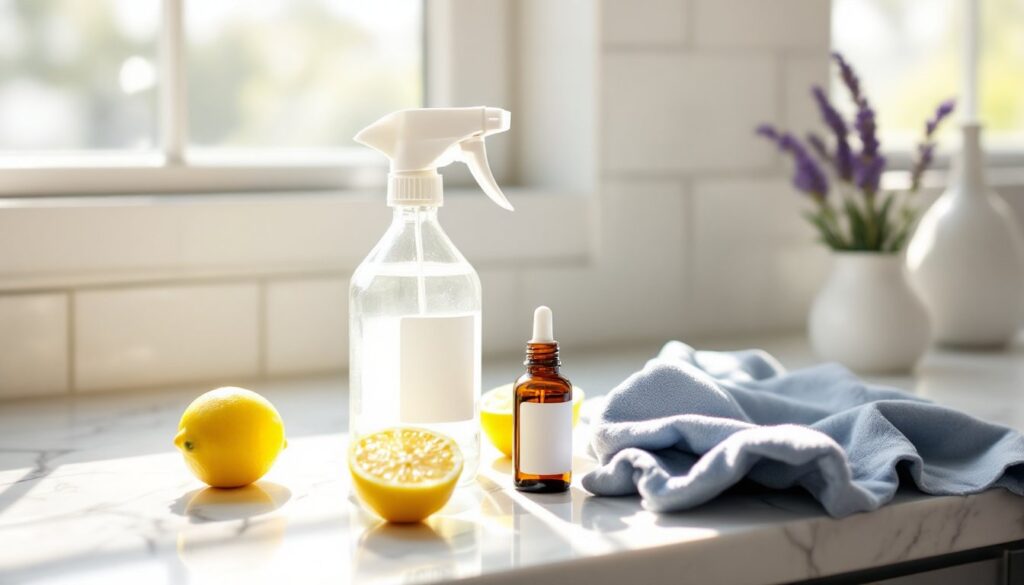
Optional add-ins include essential oils (lemon, lavender, or tea tree) for scent. Use 5 to 10 drops per 16-ounce batch. Skip oils if cleaning tinted windows or automotive glass, some oils can degrade window film over time.
You’ll also need a spray bottle. Glass or HDPE plastic (marked with a “2” recycling symbol) work best. PET plastic (marked “1”) can degrade when exposed to vinegar or alcohol over time. A 16-ounce bottle is the sweet spot for most projects.
Simple Recipe for Streak-Free Natural Glass Cleaner
This recipe makes 16 ounces, enough for several weeks of regular use.
Ingredients:
- 1 cup distilled water
- 1/4 cup distilled white vinegar (5% acidity)
- 1/4 cup isopropyl alcohol (70% or 91%)
- 5–10 drops essential oil (optional)
Instructions:
- Pour the distilled water into a clean spray bottle using a funnel. This prevents spills and ensures accurate measurements.
- Add the white vinegar. Don’t skip the funnel, vinegar splashes easily.
- Pour in the isopropyl alcohol. If using 91%, reduce the amount slightly (3 tablespoons instead of 1/4 cup) and add an extra tablespoon of water to prevent over-drying on certain surfaces.
- Add essential oil if desired. Shake gently to disperse.
- Screw on the spray nozzle and shake the bottle for 10 seconds to mix thoroughly.
That’s it. No heating, no complicated chemistry. The solution is ready to use immediately.
Many homemade cleaning sprays follow similar principles, substituting ingredients based on the cleaning task. For glass specifically, the vinegar-alcohol combination delivers the best balance of cleaning power and fast drying.
Ratio Adjustments:
For heavily soiled glass (kitchen backsplashes, garage windows), increase vinegar to 1/3 cup and reduce water to 3/4 cup. For delicate surfaces like eyeglasses or phone screens, cut the vinegar in half and increase water. Test any formula on a small, inconspicuous area first.
How to Use Your Homemade Glass Cleaner Effectively
Technique matters as much as the formula. Follow these steps for streak-free results:
- Shake the bottle before each use. Vinegar and alcohol can separate slightly over time.
- Spray lightly. Over-saturating glass causes drips and streaks. Two to three spritzes per square foot is plenty.
- Wipe in one direction using a microfiber cloth. Circular motions push dirt around. Horizontal or vertical strokes lift it off. Flip the cloth to a dry side for the final pass.
- Buff immediately. Don’t let the cleaner air-dry, that’s when streaks form. The alcohol speeds evaporation, but it’s not instant.
Best Tools for the Job:
- Microfiber cloths: Lint-free, highly absorbent, and reusable. Wash them separately without fabric softener, which reduces absorbency.
- Squeegees: Ideal for large windows or shower doors. Pull in overlapping vertical strokes, wiping the blade after each pass.
- Newspaper: Old-school, but effective. The ink acts as a mild abrasive and doesn’t leave lint. Use it only on exterior windows, newsprint can smudge interior glass.
When to Clean:
Avoid direct sunlight. Heat causes the cleaner to evaporate too quickly, leaving streaks. Early morning or overcast days provide the best conditions. For interior glass, any time works as long as the room isn’t overly warm.
Surface Compatibility:
This formula works on standard glass, mirrors, chrome fixtures, and stainless steel. Avoid using it on natural stone countertops (granite, marble), vinegar’s acidity can etch the surface. Also skip waxed or oiled wood, alcohol can strip finishes.
Common Mistakes to Avoid When Cleaning Glass
Even with the right formula, poor technique sabotages results. Here’s what to watch out for:
Using dirty rags or paper towels. Paper towels shed fibers, especially cheaper brands. Old cotton T-shirts hold onto lint and grease from previous uses. Microfiber cloths are worth the small investment, buy a 12-pack for about $10 and dedicate them to glass cleaning.
Skipping the dusting step. Dirt, cobwebs, and debris turn into muddy smears when wet. Wipe down window frames and sills with a dry cloth or vacuum attachment before spraying cleaner.
Over-spraying. More cleaner doesn’t mean more shine. It means more drips, more streaks, and more elbow grease. Light, even coverage is the goal.
Ignoring the edges. Cleaner pools in corners and along seals, leaving residue as it dries. Wipe these areas last with a dry corner of the microfiber cloth.
Cleaning in the wrong conditions. Hot glass (from direct sun or recent oven use) causes cleaners to evaporate too fast. Let the surface cool or work in the shade.
Using the same cloth for everything. A cloth used on greasy stovetops or grimy baseboards will transfer oils and dirt to glass. Keep separate cloths for glass-only use, and launder them frequently.
Many home cleaning guides emphasize prep work for good reason, it’s the difference between acceptable results and professional-looking clarity.
Storage Tips and Shelf Life
Homemade glass cleaner stays effective for months if stored correctly.
Container Choice:
Use opaque or dark-colored spray bottles if storing in a bright area. UV light can degrade vinegar and essential oils over time, reducing effectiveness. Clear bottles are fine in dark cabinets or closets.
Storage Location:
Keep the bottle in a cool, dry place away from direct sunlight. Under the sink, in a utility closet, or a pantry shelf all work. Avoid storing it in hot garages or near heat vents, high temperatures can cause the alcohol to evaporate through the spray nozzle.
Shelf Life:
The cleaner remains effective for three to six months. Vinegar and alcohol don’t spoil, but essential oils lose potency over time. If the scent fades or the solution looks cloudy, it’s time to mix a fresh batch.
Labeling:
Slap a piece of masking tape on the bottle and write “Glass Cleaner” with a permanent marker. Include the mix date if planning to store it long-term. This prevents confusion, especially if multiple DIY cleaners share the same cabinet.
Child and Pet Safety:
While natural, the solution isn’t edible. Store it out of reach of small children and pets, just like any other cleaning product. The alcohol content can cause nausea if ingested, and vinegar irritates eyes.
Freezing:
The alcohol lowers the freezing point, so the cleaner won’t solidify in cold garages or unheated storage spaces. It remains usable down to about 5°F, though it may become slightly viscous. Bring it to room temperature before use for best results.
For readers who enjoy organizing their cleaning arsenal, home organization tips offer ideas for labeling systems, caddy setups, and efficient storage solutions that keep supplies accessible but tidy.
Conclusion
Mixing a natural glass cleaner takes less time than driving to the store for a commercial bottle. The ingredients are safer, the cost is lower, and the results rival anything on the shelf. Once someone sees how well vinegar and alcohol work together, and how much money they save over a year, going back to blue-dyed sprays feels unnecessary. Clean glass doesn’t need chemicals, just the right combination and a decent microfiber cloth.