
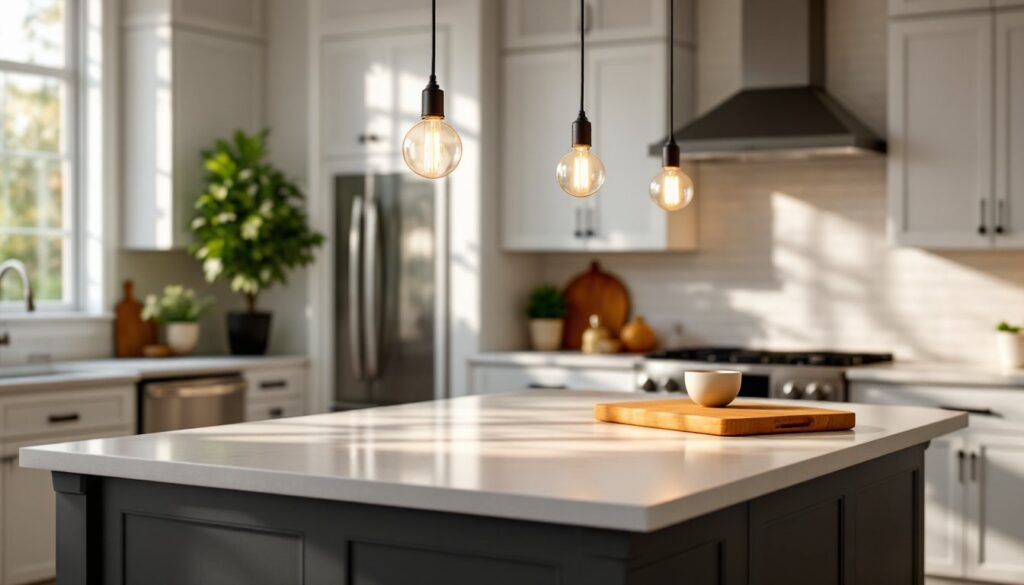

Mini pendant lights transform a kitchen island from a functional workspace into a design focal point. They provide focused task lighting where meal prep happens, add visual interest at eye level, and define zones in open-concept layouts. Unlike recessed cans or flush mounts, pendants hang into the sightline, creating layers of light that make kitchens feel warmer and more intentional. Whether someone’s upgrading a builder-grade kitchen or finishing a full remodel, choosing the right mini pendants involves balancing proportions, placement, and style, all while working within electrical code and practical constraints.
Table of Contents
ToggleKey Takeaways
- Mini pendant lights for kitchen islands should be positioned 30–36 inches above the countertop and sized so their combined width equals roughly one-third to one-half the island’s length for balanced task lighting and visual proportion.
- Proper spacing and height prevent common mistakes—divide your island length into equal zones and hang pendants at the correct distance to ensure even light distribution without dimming the ends or clustering fixtures in the middle.
- Mini pendants work across all ceiling heights and kitchen styles, from glass finishes in farmhouse aesthetics to matte black metal shades in modern designs, while maintaining consistency with cabinet hardware finishes for a cohesive look.
- Code-compliant installation requires a junction box securely fastened to structural framing, a dimmer rated for LED bulbs, and multiple pendants can be distributed from a single electrical connection using a multi-light canopy or linear track system.
- LED dimmable bulbs with ELV or LED-specific dimmers prevent flickering and offer flexibility for different times of day, while contemporary styles like cylinder and cone-shaped pendants with integrated LEDs require checking lifespan before purchase.
Why Mini Pendant Lights Are Perfect for Kitchen Islands
Mini pendants offer a sweet spot between form and function that larger fixtures can’t match. At 8–12 inches in diameter, they provide ample downlight without overwhelming the island or blocking sightlines across the kitchen. This makes them ideal for islands that double as dining or assignments zones.
They’re also easier to install in multiples. Most islands accommodate two to three mini pendants on a single junction box or distributed across separate boxes, depending on the island’s length. This flexibility lets homeowners create balanced, symmetrical lighting that adapts to different island configurations, whether it’s a compact 4-foot prep surface or an 8-foot stretch with seating on one side.
From a code perspective, pendant lights help meet IRC lighting requirements for task surfaces. The International Residential Code calls for adequate illumination in food prep areas, and pendants positioned 30–36 inches above the countertop deliver concentrated light where it’s needed most. Pairing them with dimmable LED bulbs adds control for different times of day.
Finally, mini pendants work across a range of ceiling heights. In kitchens with standard 8-foot ceilings, a shorter drop keeps the fixture from intruding into headspace. In rooms with 9- or 10-foot ceilings, adjustable cord or rod-mount pendants can be customized to the right height without appearing lost in vertical space.
How to Choose the Right Mini Pendant Lights for Your Space
Size and Scale Considerations
Scale is where most DIYers stumble. A pendant that looks perfect in a showroom can read too small, or too large, once it’s hanging over an island. As a rule of thumb, the combined width of all pendants should equal roughly one-third to one-half the island’s length. For a 6-foot island (72 inches), that means two 12-inch pendants or three 10-inch fixtures.
Vertical proportion matters just as much. Mini pendants typically range from 8 to 14 inches tall (not including the cord or canopy). Taller pendants with elongated shades work well in kitchens with higher ceilings, while drum or dome shapes suit standard ceiling heights. If the island has a raised breakfast bar or thick countertop edge, factor that into the clearance calculation, no one wants to whack their head reaching for a coffee mug.
Platforms like Houzz offer visualizer tools that let homeowners preview pendant sizes in their actual kitchen photos, which can help avoid expensive returns.
Style and Design Options
Mini pendants come in enough styles to match, or intentionally contrast, any kitchen aesthetic. Glass pendants remain the most versatile: clear glass suits farmhouse and transitional kitchens, seeded or textured glass adds character to craftsman-style spaces, and colored glass works in eclectic or retro designs.
Metal shades (typically steel, brass, or bronze) deliver an industrial or modern edge. Matte black powder-coat finishes pair well with stainless appliances and minimalist cabinetry, while unlacquered brass develops a living patina over time, a feature, not a flaw, in the right setting.
For kitchens leaning traditional, mini drum pendants with fabric or linen shades soften the look and diffuse light more gently than exposed-bulb designs. Just be aware that fabric shades near a cooktop or high-moisture areas may discolor or absorb odors over time.
Finish consistency across hardware matters more than matching exactly. If cabinet pulls are brushed nickel, pendants in brushed nickel or chrome will feel cohesive. Mixing metals intentionally, like matte black pendants with brass accents, works when it’s deliberate, not accidental.
Installing Mini Pendant Lights: Spacing, Height, and Placement Tips
Getting the spacing and height right prevents the most common pendant-lighting mistakes. Hanging height should land between 30 and 36 inches above the island countertop. Thirty inches works for islands with seating, where diners need clearance. Thirty-six inches is better for prep-only islands or when the primary users are tall.
For spacing between pendants, divide the island length into equal zones. On a 6-foot island with three pendants, place one centered and the other two roughly 18–24 inches from each end. The goal is even light distribution without clustering fixtures in the middle or leaving the ends dim. If the island is longer than 8 feet, consider four pendants instead of stretching three too far apart.
Most mini pendants install on a standard round pancake box or octagonal junction box rated for the fixture’s weight (usually 5–10 pounds per pendant). If there’s no existing box over the island, running new electrical requires opening the ceiling, this is often a two-person job and may need a permit depending on local electrical codes. The National Electrical Code (NEC) requires junction boxes to be securely fastened to structural framing, not just drywall.
If the kitchen has a single existing junction box but the design calls for multiple pendants, a multi-light canopy or linear track system can distribute several pendants from one electrical connection. These systems simplify wiring but limit adjustability compared to individual boxes.
Dimmer compatibility is non-negotiable. Install a dimmer rated for LED bulbs (most mini pendants use E26 or E12 sockets with LED retrofits). Not all LEDs dim smoothly, look for bulbs labeled “dimmable” and pair them with an ELV (electronic low-voltage) or LED-specific dimmer to avoid flickering.
Always shut off power at the breaker, use a non-contact voltage tester, and wear safety glasses when working overhead. If the install involves moving or adding circuits, hire a licensed electrician, most jurisdictions require permits for new branch circuits.
Popular Mini Pendant Light Styles for Modern Kitchens
Trends shift, but a few styles have staying power in modern kitchen design. Globe pendants, simple spheres in clear, frosted, or smoked glass, suit mid-century modern and Scandinavian-inspired kitchens. They’re clean without being stark, and they pair well with open shelving and wood tones.
Cage or wire-frame pendants lean industrial but work surprisingly well in farmhouse kitchens when finished in matte black or aged bronze. The open structure keeps them from feeling heavy, even when installed in multiples. Many cage designs accommodate vintage-style Edison bulbs, though those run hotter and less efficiently than LED filament alternatives.
Seeded glass pendants add texture without pattern, making them a safe choice for kitchens with busy backsplash tile or patterned countertops. The irregular bubbles in seeded glass diffuse light softly and hide dust better than clear glass, a practical bonus in real-world kitchens.
For contemporary spaces, cylinder or cone-shaped pendants in matte finishes deliver a gallery-like precision. These often use integrated LED modules instead of replaceable bulbs, so check the rated lifespan (typically 25,000–50,000 hours) and whether the LED is replaceable or requires swapping the entire fixture.
Designers on platforms like Remodelista increasingly favor clustered pendant installations at varied heights, but this look demands high ceilings and a strong design sensibility. For most DIY projects, uniform height and spacing deliver a cleaner, more approachable result.
Colorful pendants, think cobalt blue, amber, or emerald green glass, add personality but commit the kitchen to a specific palette. They work best in neutral kitchens where the pendants can be the hero. Swapping them out later is straightforward, but it’s an expense worth considering upfront.
Conclusion
Mini pendant lights deliver targeted task lighting, define kitchen zones, and introduce style at a human scale. Success comes down to accurate measurements, code-compliant installation, and honest assessment of ceiling height and island proportions. When the spacing, height, and finish align, pendants elevate an island from countertop to centerpiece.