
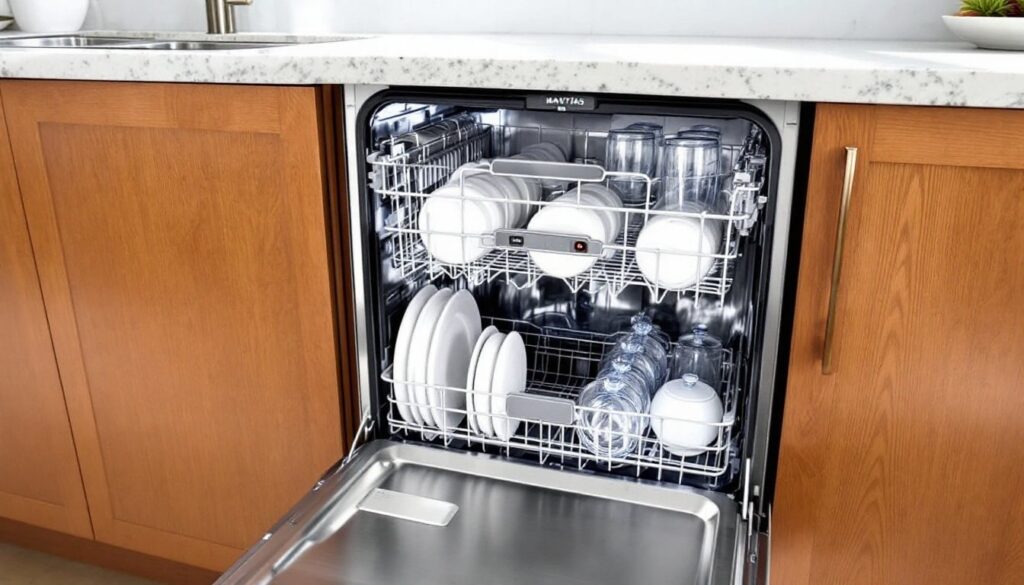

The Maytag MDB4949SKZ is a built-in dishwasher that’s been a solid mid-range workhorse for homeowners who want reliable cleaning without fancy Wi-Fi or third-rack gimmicks. This 24-inch stainless steel model landed in kitchens around 2020-2021 and has since built a reputation for straightforward performance and decent capacity. If you’re evaluating this machine for a kitchen remodel or replacement, or you already own one and want to maximize its lifespan, this guide covers everything from specs and installation to troubleshooting and maintenance. We’ll keep it practical, no fluff, just the details that matter when you’re standing in front of an open dishwasher with dirty plates.
Table of Contents
ToggleKey Takeaways
- The Maytag MDB4949SKZ is a reliable mid-range built-in dishwasher with a stainless steel tub, 14 place settings, and NSF-certified Sanitize cycle, making it ideal for families prioritizing durability over advanced features.
- This dishwasher requires proper installation with dedicated 120V electrical, 3/8-inch hot water supply, and correct drain configuration to prevent leaks and ensure optimal performance.
- Water temperature and detergent selection are critical: maintain at least 120°F hot water, use rinse aid every 4-6 weeks, and adjust dispenser settings based on your water hardness to maximize cleaning and drying results.
- The Maytag MDB4949SKZ operates at moderate noise (50 dBA) with cycle times ranging from 1 hour (Express) to 2 hours 45 minutes (Heavy), making it less ideal for open-concept kitchens or those needing quick cycles.
- Regular maintenance including monthly gasket cleaning, quarterly disposer inspection, and annual descaling will extend the dishwasher’s lifespan to 8-10 years and prevent common issues like poor drainage and mineral buildup.
- This model lacks third-rack convenience and advanced drying for plastics, but its hard-food disposer and straightforward controls make it an excellent value for homeowners seeking simplicity and proven reliability over smart features.
Key Features and Specifications of the MDB4949SKZ
The MDB4949SKZ is a 24-inch built-in dishwasher with a stainless steel tub and exterior. It’s designed for standard under-counter installation and fits most North American kitchen layouts that accommodate full-size dishwashers.
Capacity and Racks:
It offers 14 place settings, which is average for this size class. The interior uses a two-rack system, no third rack for utensils, so you’ll rely on the traditional silverware basket on the lower rack. The upper rack is height-adjustable, useful when you need to fit taller items like vases or mixing bowls on the bottom.
Wash Cycles and Options:
The unit includes six wash cycles: Normal, Heavy, Light, Express, Rinse Only, and a dedicated Sanitize cycle. The Sanitize option heats water to 150°F, meeting NSF/ANSI Standard 184 for residential dishwashers, important if you’re washing baby bottles or cutting boards. There’s also a High-Temp Wash option and a Heated Dry cycle. The control panel is front-facing with simple button controls, not a digital display.
Noise and Energy:
Rated at 50 dBA, this machine isn’t whisper-quiet but falls into the “moderate” range. You’ll hear it running if the kitchen is quiet, but it won’t drown out conversation. It’s ENERGY STAR certified, so it meets efficiency standards for water and electricity use. Expect around 4.2 gallons per cycle on normal wash.
Motor and Filtration:
It uses a hard-food disposer instead of a manual-clean filter, which means the unit grinds up small food particles during the wash. This reduces filter maintenance but can slightly increase noise.
Performance and Cleaning Power
The MDB4949SKZ delivers consistent cleaning on baked-on food when you use the Heavy or High-Temp Wash cycles. The dual-spray arm system (one on top, one on bottom) provides decent coverage, though corner placement on the lower rack can occasionally leave spots if items block spray paths.
Cycle Times:
Normal cycle runs about 2 hours 15 minutes. Heavy cycle extends to roughly 2 hours 45 minutes. The Express cycle cuts down to around 1 hour but works best for lightly soiled dishes, don’t expect miracles on dried-on pasta sauce.
Drying Performance:
Heated dry works adequately for ceramics and glassware but struggles with plastics, which is common across most dishwashers. If you want plastics fully dry, crack the door at the end of the cycle and let residual heat evaporate moisture. The lack of a fan-assisted dry means you’ll see some condensation on the door interior.
Detergent and Rinse Aid:
The machine has a built-in rinse aid dispenser, use it. Rinse aid dramatically improves drying and prevents water spots, especially if you have hard water. Stick with powdered, gel, or tablet detergent: pods work fine but avoid overloading the dispenser. According to testing by Good Housekeeping, mid-range dishwashers like this perform best when detergent is matched to water hardness.
Real-World Notes:
Pre-rinsing isn’t necessary, but scrape off large chunks. The hard-food disposer handles small bits, not half a steak. Load strategically: bowls angled downward, tall items on the sides, and avoid nesting spoons.
Installation Tips and Requirements
Installing the MDB4949SKZ is straightforward if you’re replacing an existing dishwasher. If this is a new install, you’ll need to rough in water supply, drain, and electrical before the unit goes in.
Dimensions and Clearances:
- Width: 23.875 inches (fits standard 24-inch cabinet opening)
- Height: Adjustable from 33.5 to 34.625 inches via leveling legs
- Depth: 24 inches (not including door handle)
Make sure your cabinet opening is at least 24 inches wide, 34 inches tall, and 24 inches deep. Check that countertops overhang enough to accommodate the control panel.
Electrical:
The unit requires a dedicated 120V, 15-amp circuit. Most jurisdictions require dishwashers to be hard-wired or plugged into a GFCI-protected outlet under the sink. Check your local electrical code (NEC Article 422.16). If you’re not comfortable with electrical work, hire a licensed electrician.
Plumbing:
You’ll need a 3/8-inch compression fitting on the hot water supply line (typically under the sink). The drain hose (supplied) connects to a garbage disposal or drain line with a high loop or air gap to prevent backflow, this is required by most plumbing codes (IPC Section 802.1.6). Use a drain hose clamp to secure connections.
Leveling and Securing:
Adjust the front leveling legs until the unit is level front-to-back and side-to-side. Use a bubble level on the top edge of the door. Once level, secure the dishwasher to the underside of the countertop with the provided mounting brackets and screws. This prevents tipping when the door is open and loaded.
Pro Tip:
If your old dishwasher had different mounting points, you may need to drill new pilot holes in the countertop underside. For laminate counters, use #8 x 0.75-inch screws: for stone or thick wood, you might need longer fasteners.
Common Issues and Troubleshooting Solutions
Not Starting or No Power:
Check the circuit breaker and ensure the unit is getting 120V. If the control panel is unresponsive, try resetting by unplugging for 60 seconds or flipping the breaker off and on. A blown thermal fuse (located near the control board) can also stop operation, replacement requires removing the front panel.
Poor Cleaning or Residue:
Nine times out of ten, this is a water temperature or detergent issue. Verify hot water is reaching at least 120°F at the sink before starting a cycle. If your water heater is set too low, boost it to 120-125°F. Also check that the spray arms spin freely, remove them and clear any debris from the spray holes using a toothpick or small wire.
Not Draining:
If water pools at the bottom, inspect the drain hose for kinks and check the garbage disposal knockout plug (if you have a disposal). The knockout plug must be removed for the dishwasher drain to work, it’s a common oversight during installation. Also check the hard-food disposer and drain pump area for clogs (access from inside the tub, lower filter area).
Leaking:
Door leaks usually stem from a worn door gasket. Inspect the rubber seal around the door perimeter for cracks, tears, or food buildup. Clean it with warm soapy water: if damaged, replace it (part widely available). Bottom leaks may indicate a loose hose clamp or cracked drain hose.
Error Codes:
The MDB4949SKZ doesn’t have a digital display, but if lights flash in a pattern, consult the owner’s manual. Typical patterns indicate drain issues or water inlet problems. A flashing Start/Resume light often means the door latch isn’t engaging, make sure the door clicks fully closed.
Loud Grinding Noise:
A small amount of grinding is normal from the hard-food disposer, but excessive noise may indicate a failed wash motor bearing or debris caught in the pump. Turn off power and manually spin the lower spray arm and motor impeller (accessed by removing the lower spray arm and filter assembly). If something’s jammed, you’ll feel resistance.
Maintenance Best Practices for Longevity
Monthly Tasks:
- Wipe door gasket and edges to remove food particles and grease.
- Run an empty cycle with dishwasher cleaner (citric acid-based products work well) to clear mineral deposits and grease from the interior and spray arms.
- Inspect and clean spray arms: Pull them off and rinse under running water, clearing holes with a toothpick.
Quarterly Tasks:
- Check and clean the hard-food disposer area. Remove the lower spray arm and filter assembly, then clear any debris in the sump.
- Inspect hoses and connections under the sink for leaks, cracks, or loose clamps.
- Verify the air gap (if installed) is clear. These can clog with gunk and cause drainage issues.
Annually:
- Descale the interior if you have hard water. Run a cycle with a cup of white vinegar placed upright on the top rack, or use a commercial descaler.
- Test the door latch and hinges for smooth operation. Lubricate hinges with a small amount of food-safe silicone spray if they squeak or bind.
Water Softener Considerations:
If your home has very hard water (above 10 grains per gallon), consider a whole-house softener or use a rinse aid with extra drying agents. Hard water accelerates mineral buildup and reduces detergent effectiveness. Tips for kitchen appliance care often emphasize water quality as a top factor in dishwasher lifespan.
Detergent and Rinse Aid:
Refill the rinse aid dispenser every 4-6 weeks depending on use. Adjust the dispenser setting (usually 1-5) based on your water hardness, higher settings release more rinse aid. Use the recommended detergent amount: more isn’t better and can leave residue.
Pros and Cons: Is This Dishwasher Worth It?
Pros:
- Reliable mid-range performance with a stainless steel tub that resists staining and odors.
- 14 place settings handle most family loads comfortably.
- NSF-certified Sanitize cycle for peace of mind on baby bottles, pet bowls, and cutting boards.
- Hard-food disposer reduces manual filter cleaning, just scrape plates, don’t rinse.
- ENERGY STAR certified, keeping utility bills in check.
- Straightforward controls, no app required, no touchscreen to fail.
Cons:
- 50 dBA noise level is moderate: if you want near-silent operation, you’ll need to step up to 44 dBA or quieter models.
- No third rack for flatware or small utensils, which has become standard in many newer dishwashers.
- Drying performance on plastics is mediocre, expect damp Tupperware unless you prop the door.
- Limited smart features, no Wi-Fi, no cycle notifications, no remote start.
- Cycle times are long, especially Heavy (nearly 3 hours). If you need speed, use Express and accept lighter cleaning.
Value Proposition:
This dishwasher originally retailed around $799, though it’s been spotted on sale for less during promotions. For instance, Black Friday dishwasher deals in 2021 brought the MDB4949SKZ down to $648 at some retailers. At that price point, it competes with models from Whirlpool, GE, and Frigidaire in the same class. It’s a solid pick if you prioritize durability and simple operation over bells and whistles. If you want quieter performance or a third rack, budget an extra $200-300 for mid-to-upper-tier models.
Who Should Buy It:
Homeowners looking for a dependable, no-frills dishwasher that’ll run for 8-10 years with basic maintenance. It’s especially fitting for rental properties, starter homes, or kitchen remodels on a budget.
Who Should Skip It:
If you entertain frequently and run multiple loads a day, or if noise is a dealbreaker in an open-concept kitchen, look at quieter, faster models with third racks and fan-assisted drying.
Conclusion
The Maytag MDB4949SKZ won’t turn heads with flashy features, but it delivers the core promise of a dishwasher: clean dishes without fuss. Install it correctly, maintain it regularly, and it’ll handle daily loads for years. If you already own one, follow the troubleshooting and maintenance tips above to keep it running smoothly. If you’re shopping, weigh the tradeoffs, moderate noise and basic features versus proven reliability and a reasonable price tag.