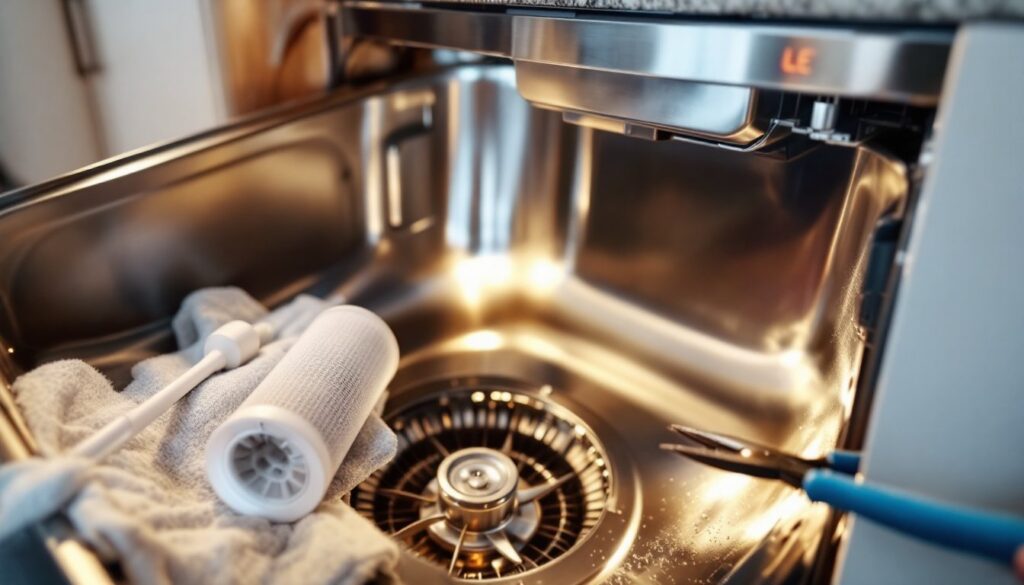

You’re halfway through loading dinner dishes when your LG dishwasher stops mid-cycle and flashes “LE” on the display. The cycle won’t restart, the control panel beeps, and you’re stuck with a tub full of dirty plates. The LE error, short for “Locked Motor Error”, is one of the most common fault codes on LG dishwashers, but it’s not always a death sentence for your appliance. In most cases, it’s caused by something simple: an obstruction blocking the wash motor or an overloaded dish rack jamming the spray arms. This guide walks through what triggers the LE code, how to diagnose it step-by-step, and when you actually need to call in a pro for a motor replacement.
Table of Contents
ToggleKey Takeaways
- The LG dishwasher LE error indicates a Locked Motor problem, typically caused by obstructions, overloaded racks, or internal motor failure rather than a complete appliance breakdown.
- In roughly 70% of cases, the LE error code stems from external debris or improper dish loading, making simple troubleshooting your first step before calling a professional.
- Clear common culprits by checking spray arm rotation, cleaning the filter assembly, and removing foreign objects from the sump cavity using a flashlight and needle-nose pliers.
- Motor replacement costs $250–$450 in total labor and parts; if your dishwasher is over 7–8 years old, compare this to the price of a new unit to determine if replacement is more cost-effective.
- Start with a power cycle reset, inspect spray arms for clogs, and verify the impeller cavity is clear—these simple fixes resolve most LG dishwasher LE errors without professional intervention.
What Does the LE Error Code Mean on Your LG Dishwasher?
The LE error code stands for “Locked Motor” or “Motor Error,” depending on which LG tech manual you reference. Either way, it means the dishwasher’s circulation motor can’t spin freely. The control board sends power to the motor, expects it to rotate and pump water through the spray arms, and when it doesn’t detect movement or draws abnormal current, it throws the LE code and halts the cycle.
This isn’t the same as a drainage error (OE) or a heating fault (HE). The LE code is specifically tied to mechanical resistance in the wash motor assembly, the pump that circulates water during the wash and rinse phases. That resistance can come from physical obstructions (broken glass, twist ties, chunks of food), mechanical failure inside the motor itself (worn bearings, seized rotor), or even a wiring issue that prevents the motor from getting the right voltage.
Most LG dishwasher models, front-control, top-control, QuadWash, TrueSteam, use the same diagnostic logic. If the motor can’t reach its target RPM within a few seconds of startup, the board cuts power and displays LE. The good news: in roughly 70% of cases reported in appliance forums and repair tutorials, the problem is external debris or improper loading, not a failed motor. The bad news: if it is a failed motor, you’re looking at a part that costs $150–$250 plus labor, and at that price point, some homeowners opt to replace the dishwasher entirely, especially if it’s more than seven years old.
Before you assume the worst, spend 15 minutes checking the simple stuff. You’ll need a flashlight, a dry towel, and possibly a pair of needle-nose pliers.
Common Causes of the LE Error Code
Overloaded Dishes and Blocked Spray Arms
One of the easiest triggers for the LE code is cramming too many dishes into the racks. When plates or bowls hang over the edge of the lower rack, they can physically block the lower spray arm from rotating. The spray arm is belt-driven or direct-coupled to the wash motor on most LG models: if it can’t spin, the motor works harder, draws more current, and the control board interprets that as a locked rotor.
Pull out the lower rack and spin the spray arm by hand. It should rotate smoothly with minimal resistance. If it catches, binds, or stops after a quarter turn, you’ve found your culprit. Check for:
- Tall pot handles or cutting boards blocking the arm’s path
- Silverware that’s fallen through the basket and wedged under the arm
- Warped or melted plastic items (yes, that lightweight food storage lid can melt and fuse to the spray arm if it falls onto the heating element)
The upper spray arm can cause the same issue, though it’s less common because it’s smaller and lighter. Still worth a spin test.
If the spray arms move freely but you’re still getting the LE code, move to the next check.
Foreign Objects Jamming the Motor
The wash motor sits directly below the filter assembly at the bottom of the tub. Small, hard objects, twist ties, broken glass shards, fruit pits, toothpicks, bones, chunks of broken dishware, can slip past the filter screen and lodge in the impeller housing. Once they’re in there, they jam the impeller blades and physically lock the motor.
You won’t see these from above. You need to remove the lower spray arm (usually a quarter-turn twist or a snap-off clip), lift out the cylindrical filter assembly (it twists counterclockwise on most LG models), and look into the sump cavity beneath it. Use a flashlight. You’re looking for anything that doesn’t belong: metal, plastic, glass, or organic debris.
Common finds reported by appliance techs include:
- Broken pieces of wine glass stems
- Staples from produce stickers
- Small bones from chicken wings or ribs
- Plastic label fragments from jars
If you spot something, pull it out with needle-nose pliers or tweezers. Don’t try to spin the impeller by hand with the power on, always disconnect power at the breaker before reaching into the motor housing. Water and electricity don’t mix, and even a low-voltage motor can deliver a painful shock if the control board is still energized.
Once you’ve cleared any debris, reassemble the filter and spray arm, run a rinse cycle, and see if the LE code clears. If it does, you’re done. If it persists, you’re likely dealing with internal motor failure or a wiring fault.
Step-by-Step Troubleshooting Guide
Here’s the full diagnostic sequence. Work through these steps in order: each one builds on the last.
1. Power cycle the dishwasher.
Unplug the unit or flip the breaker off for 60 seconds, then restore power. LG dishwashers use solid-state control boards that can occasionally glitch and throw false error codes. A hard reset clears the memory and forces the board to re-test the motor. If the LE code was a one-time anomaly, it won’t come back.
2. Inspect and clean the spray arms.
Remove the lower spray arm (twist or unclip, depending on model). Spin it by hand. Check the nozzles for clogs, mineral deposits from hard water can restrict flow and create back pressure that the motor interprets as resistance. Use a toothpick or a straightened paperclip to clear each nozzle. Repeat for the upper spray arm.
3. Remove and clean the filter assembly.
Twist the cylindrical filter counterclockwise and lift it out. Rinse it under hot water. Check the fine mesh screen for trapped food particles, grease buildup, or mineral scale. A clogged filter won’t directly cause an LE code, but it forces the motor to work harder, which can tip the control board’s current sensor into fault mode.
4. Check the sump and impeller for obstructions.
With the filter removed, shine a flashlight into the sump cavity. Look for foreign objects around the impeller blades. If you see something, use pliers to extract it. Wear nitrile gloves, there’s standing water in the sump, and it’s not sanitary.
5. Test the motor manually (advanced).
If you’re comfortable with appliance disassembly, you can access the motor from below. Tilt the dishwasher back (have a helper hold it or prop it safely), remove the lower access panel, and locate the wash motor. Try spinning the motor shaft by hand. It should turn smoothly with slight resistance. If it’s completely seized or makes grinding noises, the motor bearings have failed.
Many appliance repair tutorials caution against DIY motor replacement unless you’ve worked on dishwashers before, the motor is bolted to the sump housing with multiple fasteners, and you’ll need to disconnect hoses, wiring harnesses, and sometimes the entire tub assembly depending on the model. It’s not a beginner-level repair.
6. Run a test cycle.
Reassemble everything (filter, spray arms), close the door, and start a rinse or quick wash cycle. If the LE code clears and the dishwasher completes the cycle, you’re good. If the code reappears within the first 30 seconds, you’ve ruled out obstructions and the problem is internal to the motor or control board.
Safety note: Always disconnect power before removing panels or reaching into the motor cavity. Even when the unit is off, capacitors in the control board can hold a charge. If you’re not sure, call a tech.
When to Call a Professional for Motor Replacement
If you’ve cleared all obstructions, reset the unit, and the LE code still shows up every time you start a cycle, the wash motor assembly has likely failed internally. Common failure modes include:
- Seized bearings: The motor shaft won’t turn, even with no external obstruction. This happens over time as grease dries out or water seeps into the bearing seals.
- Burned-out windings: The motor hums or buzzes but doesn’t spin. You might smell a faint electrical or burnt plastic odor.
- Faulty rotor magnet: Less common, but the rotor can crack or demagnetize, preventing the motor from generating torque.
Replacing the motor requires removing the dishwasher from the cabinet (if it’s built-in), disconnecting the water supply and drain hose, tilting or flipping the unit to access the underside, and swapping the motor assembly. It’s a 1–2 hour job for an experienced tech, but a 4–6 hour ordeal for a first-timer, and you risk damaging hoses, wiring, or the tub gasket if you’re not careful.
Cost breakdown (as of 2026, US averages):
- OEM LG motor assembly: $150–$250
- Labor (professional install): $100–$200
- Total: $250–$450
If your dishwasher is more than 7–8 years old and showing other signs of wear (rust on the racks, cracks in the tub, door latch issues), compare that repair cost to the price of a new mid-range dishwasher ($400–$700). Sometimes replacement makes more financial sense, especially if you’re already upgrading other kitchen appliances.
If you decide to hire a tech, ask upfront whether they’ll provide a written estimate before ordering parts. Some shops charge a diagnostic fee ($75–$100) that applies toward the repair if you proceed. Verify that the tech is comfortable working on LG models, some independent shops specialize in certain brands and may not stock LG parts.
One more thing: if your dishwasher is still under warranty (LG offers a 1-year limited warranty on parts and labor, plus extended coverage on certain components if you registered the unit), contact LG directly before hiring a third-party tech. Unauthorized repairs can void warranty coverage, and LG may cover the motor replacement at no cost if the failure falls within the warranty window.
Conclusion
The LE error on an LG dishwasher sounds intimidating, but it’s often a fixable problem. Start with the simple checks: clear the spray arms, pull the filter, and look for jammed debris in the sump. A five-minute inspection can save you a $300 service call. If the motor itself has failed, weigh repair costs against replacement and don’t hesitate to bring in a pro if you’re not confident with the disassembly. Most importantly, keep that filter clean and avoid overloading the racks, it’s the easiest way to prevent the LE code from coming back.