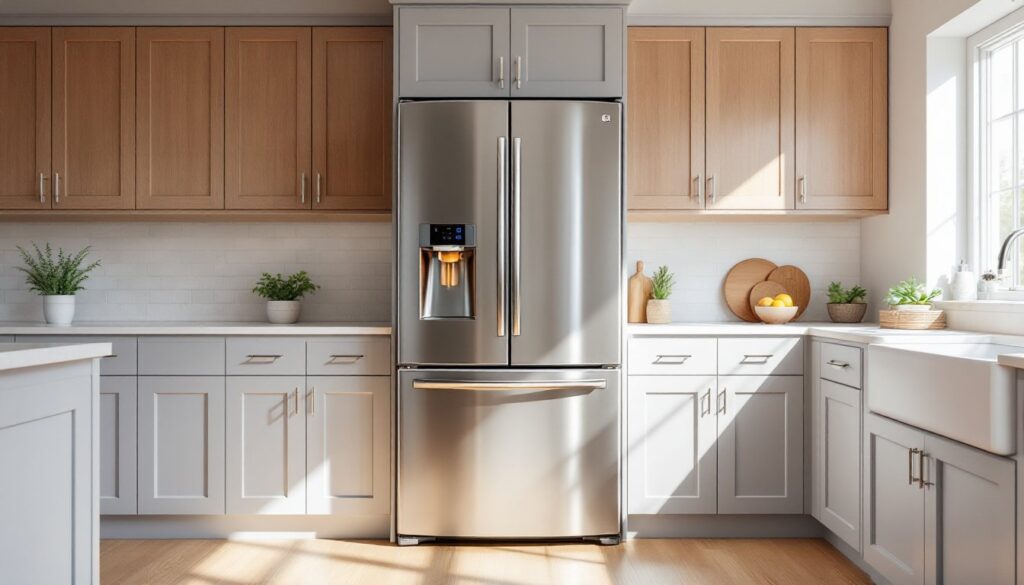

LG’s Counter Depth Max refrigerator lineup has redefined how modern kitchens handle space, storage, and style. Unlike traditional fridges that jut out several inches past cabinets, these models sit nearly flush with standard-depth countertops while offering significantly more capacity than older counter-depth designs. For homeowners planning a kitchen remodel or simply replacing an aging appliance, understanding what sets this series apart, from its Zero Clearance hinge system to its smart grid-ready features, can mean the difference between a frustrating install and a seamless upgrade that adds both function and value to the home.
Table of Contents
ToggleKey Takeaways
- LG Counter Depth Max refrigerators feature Zero Clearance hinge technology that eliminates the need for 1–2 inches of side clearance, making them ideal for galley kitchens and tight spaces while sitting flush with standard 24–25-inch countertops.
- These models offer 23–26 cubic feet of usable storage—exceeding the 20–22 cubic feet of traditional counter-depth designs—so you don’t sacrifice capacity for a built-in appearance.
- Smart ThinQ connectivity lets you adjust temperatures remotely, monitor door status, and integrate with Alexa or Google Assistant, while InstaView Door-in-Door reduces cold air loss by up to 41% on select models.
- ENERGY STAR certification means the LG Counter Depth Max uses 10% less energy than federal standards, costing roughly $65–$80 annually to operate and qualifying for utility rebates of $50–$100 in many states.
- Installation requires a dedicated 115V circuit, proper leveling with a 1/4-inch backward tilt, and a water line connection (if ice-maker equipped), but the 10-year compressor warranty and sleek design add both longevity and resale value to your kitchen.
What Makes the LG Counter Depth Max Different?
The core innovation in LG’s Counter Depth Max line is the Zero Clearance hinge design, which allows the refrigerator to sit flush against walls and adjacent cabinetry without requiring extra side clearance for door swing. Traditional counter-depth models need 1–2 inches of clearance on the hinge side, eating into available space. LG’s spring-loaded hinge eliminates that requirement, freeing up several inches in tight galley kitchens or narrow alcoves.
Another distinguishing feature is maximum usable capacity within a counter-depth footprint. Standard counter-depth refrigerators typically offer 20–22 cubic feet of space. LG’s Counter Depth Max models push that to 23–26 cubic feet, depending on configuration, by optimizing interior layout and using thinner but more efficient insulation. This means homeowners don’t sacrifice storage when choosing a built-in look.
The exterior depth measures approximately 24–25 inches (excluding handles), aligning with standard countertop depths of 24–25 inches. Actual dimensions vary by model (French door, side-by-side, or four-door configurations), so measure the available alcove width, height, and depth before ordering. Leave at least 1 inch of clearance at the top and rear for ventilation, critical for compressor longevity and energy efficiency.
Key Features and Smart Technology
LG equips Counter Depth Max refrigerators with InstaView Door-in-Door panels on select models, allowing users to knock twice on the tinted glass to illuminate the interior without opening the door. This reduces cold air loss by up to 41% compared to repeated door openings, according to LG’s internal testing. The Door-in-Door compartment itself provides quick access to frequently used items like milk, juice, and condiments.
Craft Ice technology (available on premium models) produces slow-melting 2-inch ice spheres, a feature borrowed from LG’s Signature line. The dual ice maker also dispenses standard cubed and crushed ice. Installation requires a 1/4-inch water line connection with a minimum of 20 psi water pressure. If the home has older plumbing or low pressure, a booster pump may be necessary.
Smart connectivity via LG ThinQ allows remote temperature adjustment, diagnostics, and notifications through a smartphone app. The refrigerator connects to Wi-Fi (2.4 GHz band only: 5 GHz is not supported), and users can integrate it with Amazon Alexa or Google Assistant for voice control. The app also provides filter replacement reminders and can alert homeowners to temperature fluctuations or door-ajar conditions, useful during power outages or if kids leave the fridge open.
Capacity and Storage Solutions
Interior shelving uses tempered glass with a spill-protector edge, preventing liquids from dripping onto lower shelves. Adjustable bins and full-width drawers accommodate everything from sheet pans to bulk grocery runs. The crisper drawers feature humidity controls (one high-humidity for leafy greens, one low for fruits), extending produce life by several days compared to non-controlled environments.
The freezer layout varies by configuration. French-door models typically offer a bottom-mount freezer with pull-out drawers, while side-by-side versions split freezer and fridge vertically. Four-door models add a middle drawer (often called a “Flex Zone”) that can switch between fridge and freezer temps, handy for holiday meal prep or bulk meat storage. Total freezer capacity generally runs 6–8 cubic feet, adequate for a family of four with occasional bulk shopping.
Installation Considerations for Your Kitchen
Before delivery, measure the doorway width, hallway turns, and stairwell clearances if installing on an upper floor. LG’s largest Counter Depth Max models can be 35–36 inches wide, and most exterior doors in older homes are 32–34 inches. Removing the refrigerator doors (a straightforward process with a socket wrench and an extra pair of hands) typically provides the necessary clearance. Keep the door hardware and water line connections in labeled bags during transport.
Electrical requirements are standard: a dedicated 115V, 15-amp circuit with a grounded three-prong outlet. Avoid using extension cords or power strips, which can cause voltage drops and compressor damage over time. The outlet should be accessible without moving the fridge, building codes in many jurisdictions (check local amendments to the IRC and NEC) require appliance outlets to be reachable for disconnection without pulling the unit out.
For water line hookup, a braided stainless-steel supply line is more reliable than plastic tubing and less prone to kinks or ruptures. Shut off the main water supply before connecting, and check for leaks after turning it back on. If the kitchen lacks an existing water line (common in older homes), running one from the basement or crawl space may require drilling through floor joists, mark the route carefully and avoid cutting into load-bearing members or existing electrical runs.
Leveling the refrigerator is non-negotiable. Use the adjustable front leveling feet (accessible behind the kickplate) and a bubble level placed on an interior shelf. A slight backward tilt (about 1/4 inch over the unit’s depth) ensures doors close on their own and prevents water pooling in the ice maker tray. Many homeowners planning kitchen organization upgrades also tackle this step during broader renovations to ensure all appliances align with new cabinetry.
Energy Efficiency and Cost Savings
LG’s Counter Depth Max refrigerators carry ENERGY STAR certification, meaning they use at least 10% less energy than the federal minimum standard. Estimated annual electricity consumption ranges from 550 to 650 kWh, translating to roughly $65–$80 per year at the national average rate of $0.12/kWh (rates vary widely by region, check local utility bills for accurate estimates).
The Inverter Linear Compressor adjusts cooling output based on interior temperature and door openings, reducing energy waste compared to traditional single-speed compressors. LG backs this compressor with a 10-year limited warranty, significantly longer than the industry-standard one-year coverage. Over a 10-year lifespan, the energy savings can offset $150–$200 of operating costs compared to non-ENERGY STAR models.
Smart grid integration (available on ThinQ-enabled models) allows the refrigerator to shift heavy cooling cycles to off-peak hours when electricity rates are lower, a feature some utilities reward with rebates. Check with local power companies, programs vary, but rebates of $50–$100 for ENERGY STAR appliances are common in many states. Recent appliance innovations in 2026 have spotlighted models like this for balancing efficiency with performance.
Maintenance Tips to Maximize Performance
Replace the air and water filters every six months or per the indicator light on the control panel. LG’s filters (model numbers LT1000P for water, LT120F for air) are readily available at big-box stores and online. Third-party filters cost less but may not meet NSF/ANSI 401 certification for contaminant reduction, if water quality is a concern, stick with OEM parts.
Clean the condenser coils at least once a year. On Counter Depth Max models, coils are typically bottom-mounted behind the kickplate. Unplug the unit, remove the grille, and use a coil brush or vacuum attachment to remove dust buildup. Clogged coils force the compressor to work harder, reducing efficiency by up to 25% and shortening lifespan. Wear gloves and a dust mask, coils collect pet dander, lint, and other allergens.
Wipe down door seals (gaskets) monthly with mild soap and water. Cracked or loose gaskets allow cold air to escape, spiking energy use and causing frost buildup. Test the seal by closing the door on a dollar bill, if it pulls out easily, the gasket needs replacement. LG sells replacement gaskets by model number: installation is a DIY-friendly task with a Phillips screwdriver.
Defrost the ice maker quarterly if ice cubes appear smaller or clump together. Empty the ice bin, turn off the ice maker (hold the “Ice Plus” button for three seconds on most models), and let the unit run empty for 24 hours. Mineral buildup from hard water can clog the fill tube, if the home has water hardness above 7 grains per gallon, consider a whole-house softener or an inline filter upstream of the fridge.
Is the LG Counter Depth Max Worth the Investment?
Pricing for LG Counter Depth Max refrigerators ranges from $2,400 to $4,500, depending on size, finish (stainless steel, black stainless, or PrintProof finish), and feature set. That’s a 20–40% premium over standard-depth models with similar capacity, but the trade-off is a streamlined look and better kitchen flow, especially in open-concept layouts where the fridge is visible from living areas.
For kitchens with existing cabinetry that can’t accommodate a traditional 30–32-inch-deep fridge, the Counter Depth Max avoids a costly cabinet rebuild. Homeowners exploring design inspiration for tight spaces often find that a flush-mount fridge opens up sightlines and makes the room feel larger. Resale value is another consideration: homes with updated, built-in-look appliances tend to photograph better and appeal to buyers seeking move-in-ready properties.
The 10-year compressor warranty and ENERGY STAR efficiency provide long-term cost protection, but the upfront price remains a barrier for budget-conscious buyers. If the existing fridge is functional and the kitchen layout already works, there’s no urgent need to upgrade. But, for anyone planning a remodel, replacing an old top-freezer model, or simply tired of a fridge that dominates the room, the Counter Depth Max delivers measurable improvements in storage, efficiency, and aesthetics.
Bottom line: this isn’t a necessity, but it’s a smart upgrade for homeowners who value clean lines, advanced features, and the ability to maximize every inch of kitchen real estate without sacrificing capacity.